From September 9 to 11, a delegation from Tsinghua University, led by Professor Guan Dabo, Vice Dean of the Institute for Carbon Neutrality(ICON), and Professor Liu Yunxin, Principal Researcher at the Institute for AI Industry Research (AIR), conducted an exchange visit to Addis Ababa, Ethiopia. The visit focused on in-depth discussions around energy transition, climate adaptation, and AI-enabled solutions. During their stay, the delegation visited the Mission of China to the African Union (AU), the Embassy of China in Ethiopia, attended the Second Africa Climate Summit, and visited the Ethiopia Branch of China Wuyi Co., Ltd.
On September 9, the delegation visited the Mission of China to the AU. Professor Guan Dabo delivered a report titled "Climate Change and Carbon Accounting," systematically elaborating on the causes, impacts, and countermeasures of climate change. He pointed out that the China Carbon Accounting Database (CEADs) developed by his team encompasses point-source carbon emission data for key global sectors, global input-output models, and multi-scale energy, CO2 emission, and socio-economic inventories for developing economies worldwide, including China, Ethiopia, and Morocco. Professor Guan emphasized that CEADs consistently adheres to the principle of "Open Science, Open Collaboration," dedicated to building a transparent, verifiable, comparable, and completely free platform, providing a solid data foundation for global climate governance. In this process, the team attaches great importance to the critical role of Africa in the global climate governance system, and the database’s development holds profound significance for African nations. By providing scientific and accurate carbon emission data, it can effectively help African countries address the lack of foundational data, supporting their climate assessments, formulation of emission reduction strategies, and participation in international negotiations. Looking ahead, the team looks forward to promoting complementary integration and win-win cooperation between China and Africa in climate governance through knowledge sharing and capacity building, thereby advancing global climate governance and low-carbon transition.
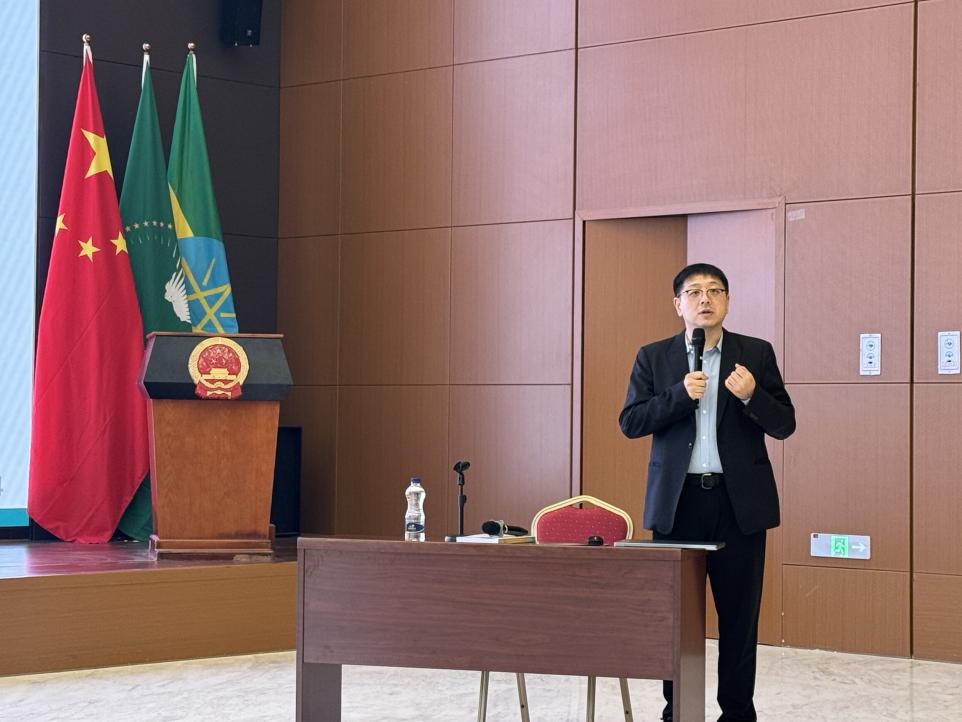
Professor Guan Dabo delivering a report at the Mission.
During the visit, H.E. Jiang Feng, Head of the Mission of China to the AU and Representative to the United Nations Economic Commission for Africa, provided an overview of Africa's security, economic, and social development. He noted that current cooperation between Chinese and African universities in the fields of industrial development and climate change remains relatively sparse. Both sides could collaborate in areas such as new energy, photovoltaics, critical mineral development, climate adaptation, and low-carbon technologies. Such cooperation would not only help promote Africa's economic transformation and sustainable development but also enhance the research capabilities and technological innovation levels of both sides, achieving genuine mutual benefit and win-win outcomes.
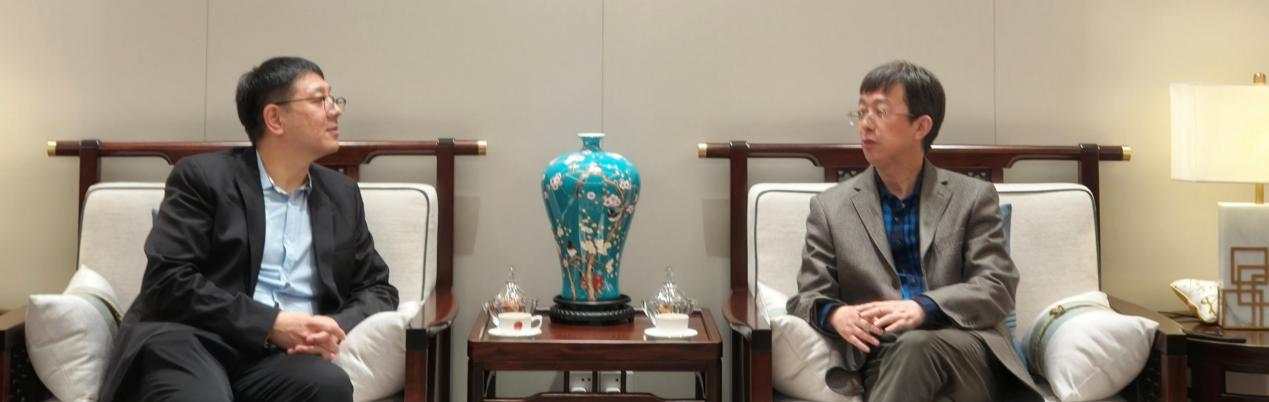
Meeting with Ambassador Jiang Feng.
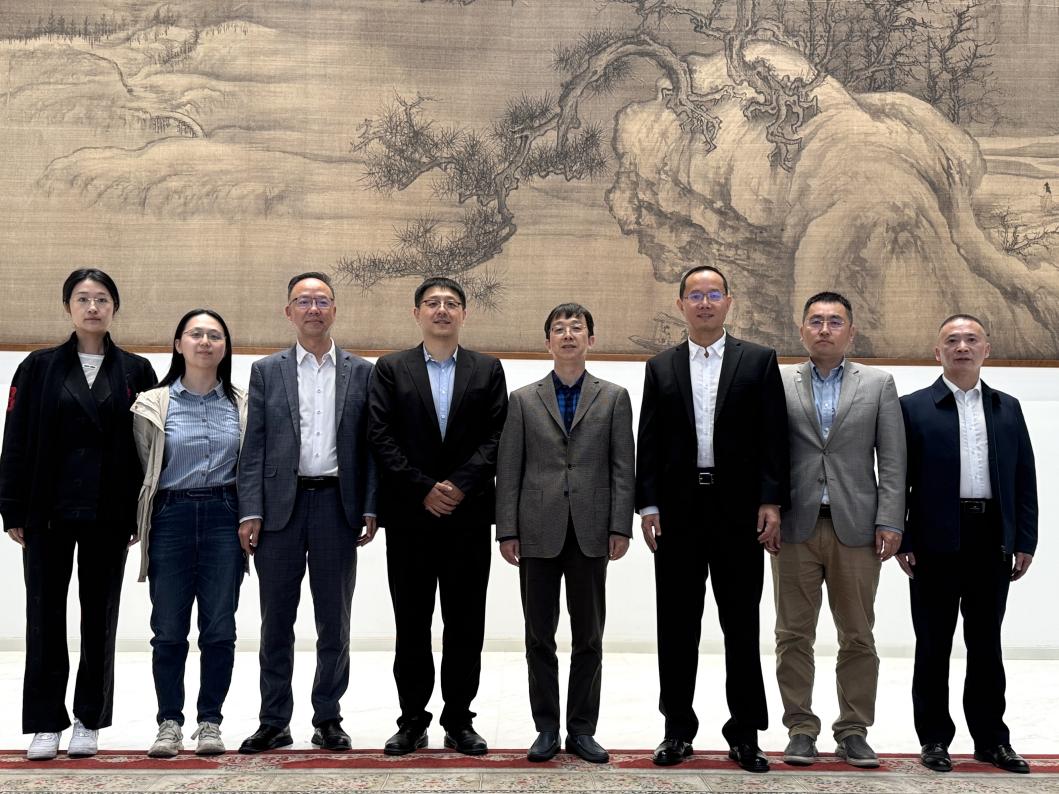
Group photo at the Mission.
On September 10, Professors Guan Dabo and Liu Yunxin were invited to participate in the Forum on AI-Boosted Climate Resilience Building at the Second Africa Climate Summit. Professor Liu Yunxin stated that AI is a strategic technology leading the new round of scientific and technological revolution and industrial transformation, profoundly reshaping traditional industries and global sustainable development pathways. He emphasized that the AI technological system must closely serve the strategic needs of addressing and adapting to climate change, playing a significant role in promoting carbon neutrality, economic development, and technological innovation. He further pointed out that AI can play a key role in various areas, including smart energy management, optimization of low-carbon industrial processes, climate prediction, and disaster early warning, and shared the latest research progress of Tsinghua research teams in using AI to enhance production efficiency and reduce emissions.
Professor Guan Dabo stressed that data is the foundation of AI development; data empowers AI, and AI in turn enhances the value of data—the two are mutually reinforcing. Meanwhile, he introduced the team’s completed "CO2 Emissions Report of Emerging Economies," which systematically constructs multi-sector CO2 emission inventories for several African countries, including Ethiopia, Kenya, and South Africa. The report clearly presents the emission structures and dynamic changes in key sectors such as energy use and industrial production for each country, providing a solid data foundation for scientifically assessing Africa's climate vulnerability and formulating fair and reasonable emission reduction pathways. It offers strong support for African countries in advancing low-carbon transition and achieving sustainable development goals, garnering high attention and recognition from numerous foreign dignitaries and scholars.
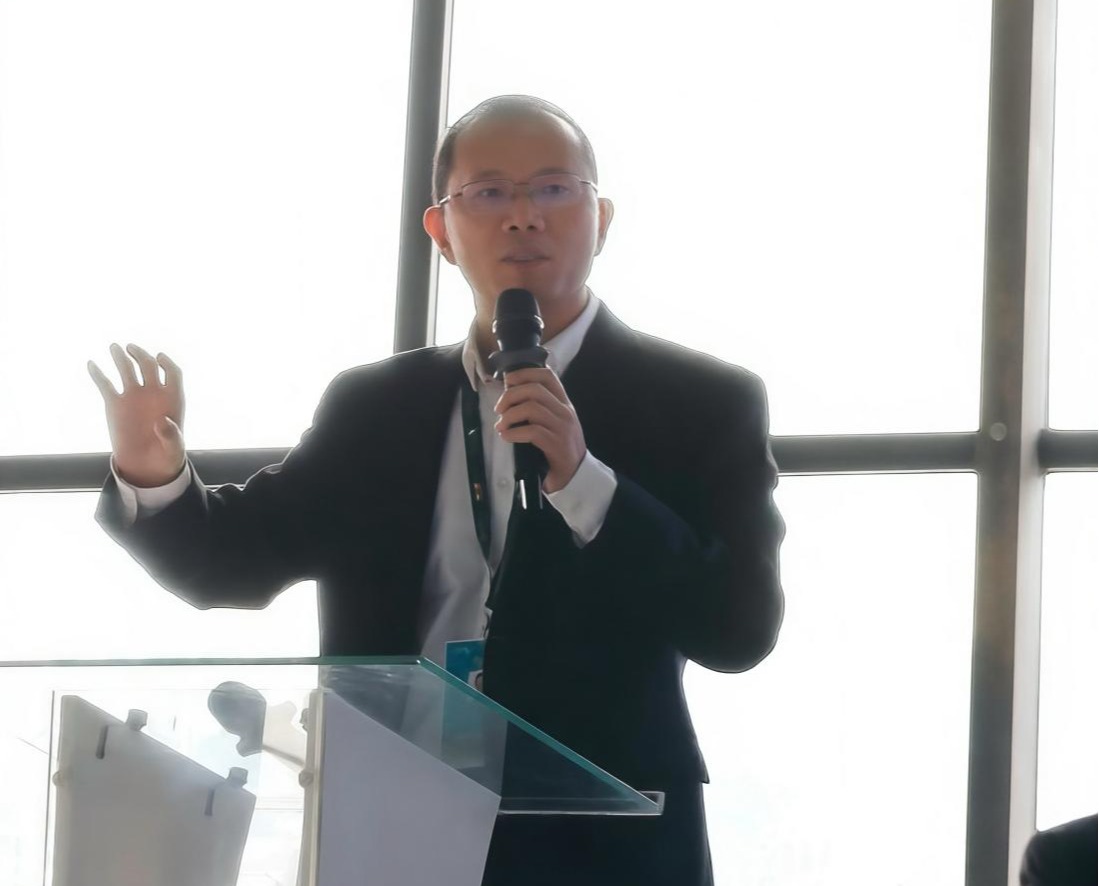
Professor Liu Yunxin speaking at the forum.
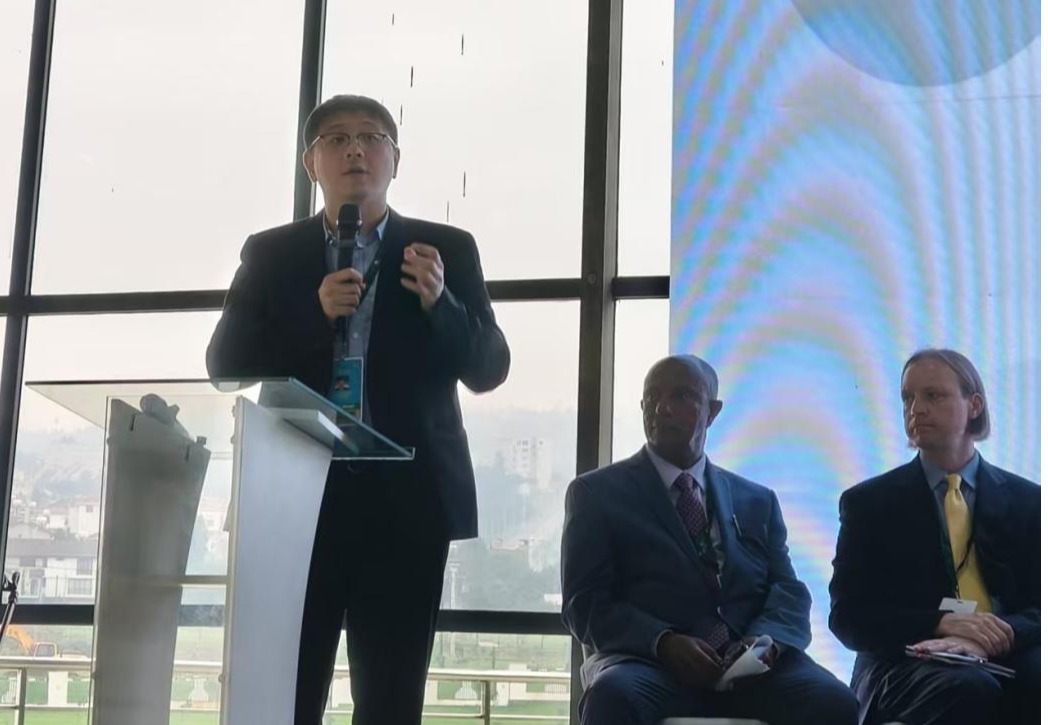
Professor Guan Dabo speaking at the forum.
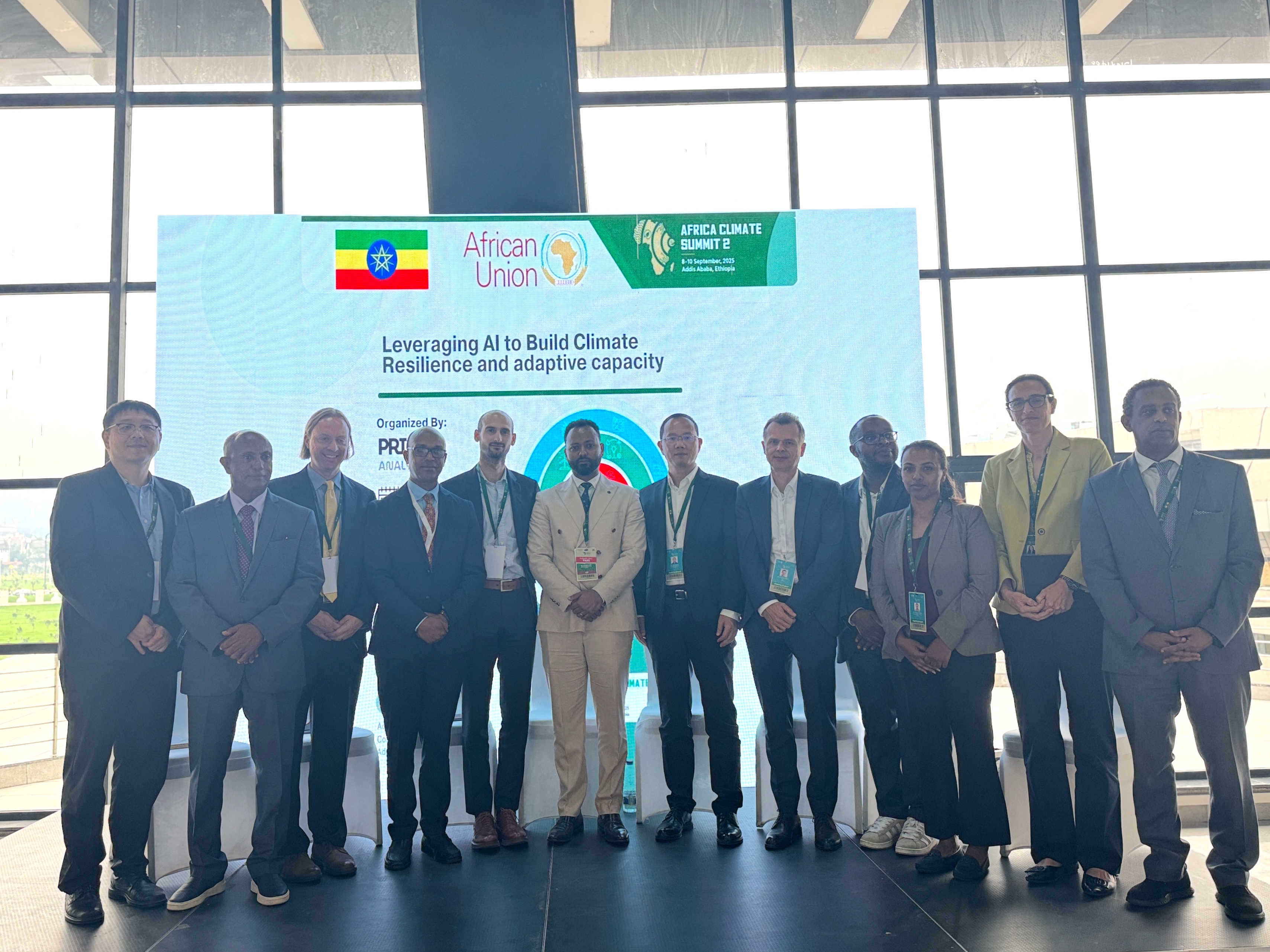
Group photo at the forum.
During the summit, Professors Guan Dabo and Liu Yunxin met with Mr. Kassahun Tesfaye, Director General of the Emerging Technologies Directorate under the Ministry of Innovation and Technology of Ethiopia. Director General Kassahun Tesfaye pointed out that climate change is a global issue requiring cooperation from all nations. He fully acknowledged China's achievements in renewable energy and emission reduction technologies, stating that Ethiopia highly values in-depth alignment with China in the field of science and technology. He also introduced Ethiopia's key directions in new energy development, including vigorously promoting hydropower dam construction projects. He expressed that both sides should maintain close communication and contact after the meeting, actively exploring cooperation in energy transition, climate change adaptation, and clean technology innovation. Furthermore, he emphasized encouraging participation from researchers and young scholars from both sides to enhance the reserve of scientific and technological talents in the field of sustainable development, contributing wisdom and solutions to jointly addressing global climate challenges.
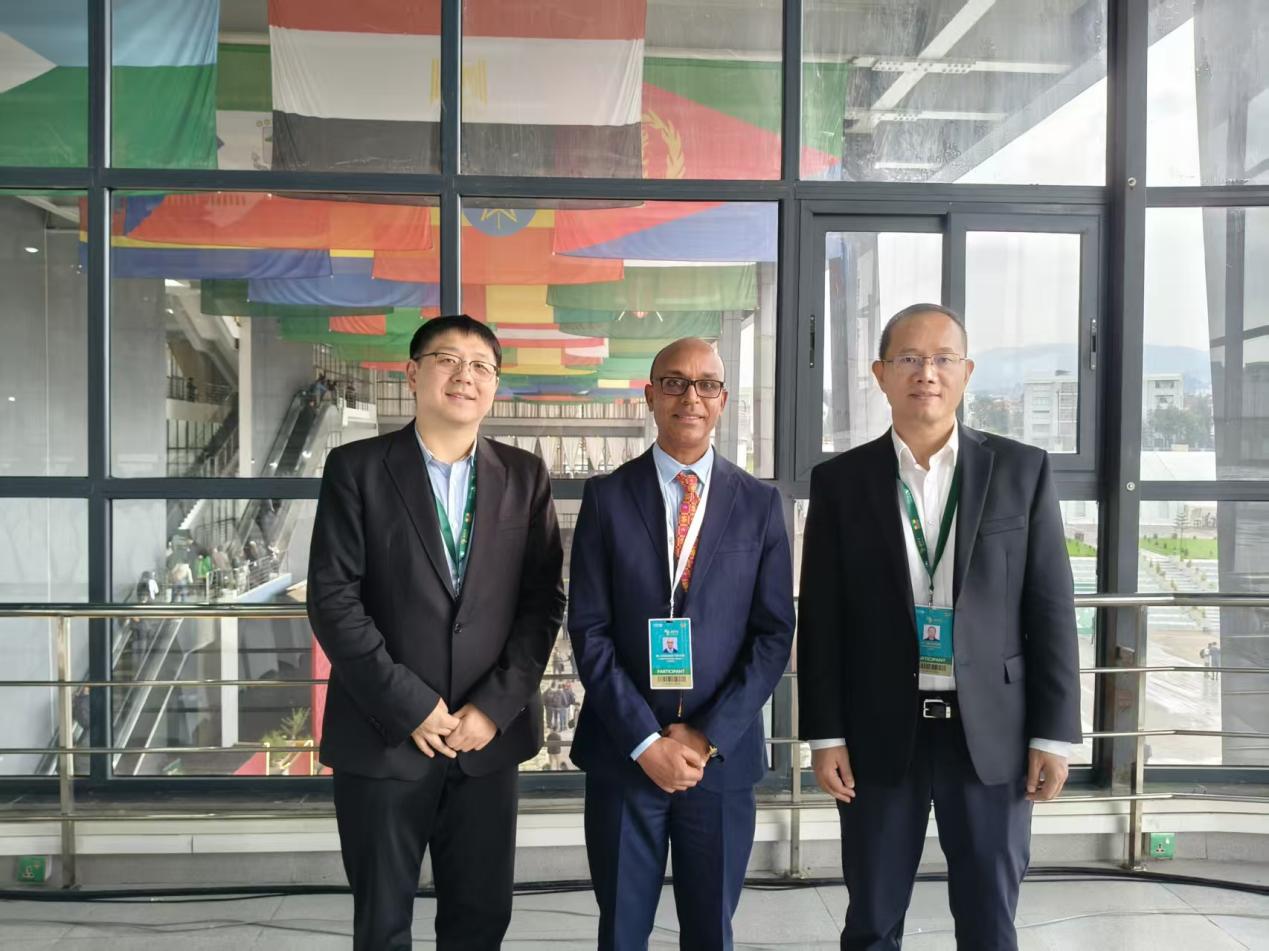
Group photo with Director General Kassahun Tesfaye of Ethiopia's Emerging Technologies Directorate.
On the same day, Mr. Sun Mingxi, Chargé d'Affaires a.i. of the Embassy of China in Ethiopia, met with the delegation. Professor Liu Yunxin delivered a lecture titled "Artificial Intelligence: From Turing to Agents." He systematically elaborated on the development history, latest frontiers, application scenarios, related technological platforms, and research layout of AI technology, emphasizing AI's role in crucial fields such as carbon neutrality, smart IoT, and smart healthcare. Professor Liu also noted that AI is not only reshaping traditional industry structures but also playing an increasingly important role in global sustainable development. He provided a detailed introduction to the development history, research teams, key research directions of Tsinghua's Institute for AI Industrial Research, and the joint research centers established with leading industry enterprises. He stated that AI is a strategic technology leading the new round of scientific and technological revolution and industrial transformation. The Institute is committed to cultivating technology leaders with an international perspective, empowering industries with AI technological innovation, and promoting social progress. Both sides engaged in lively academic discussions on AI and climate change.
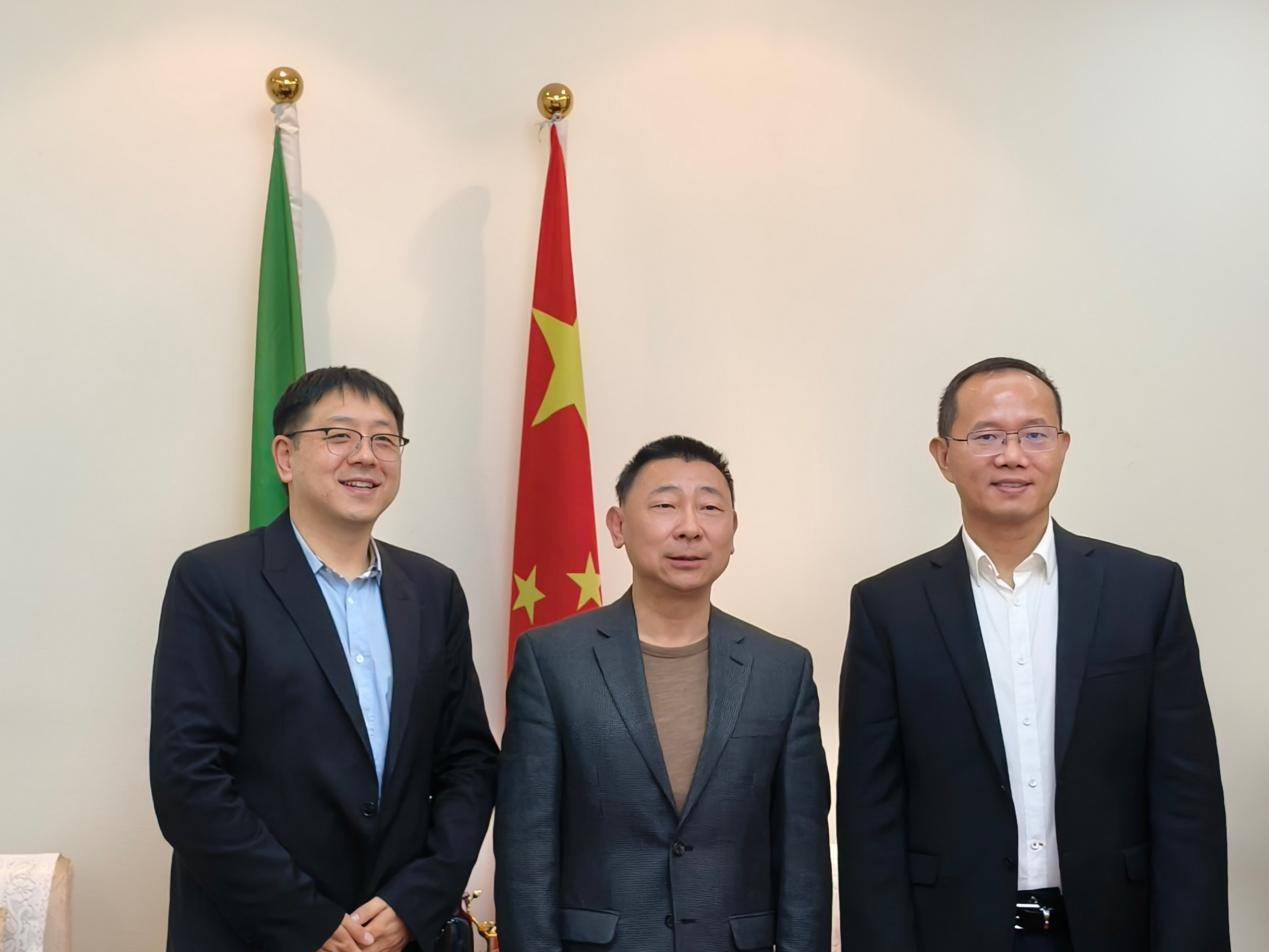
Group photo with Chargé d'Affaires a.i. Sun Mingxi.
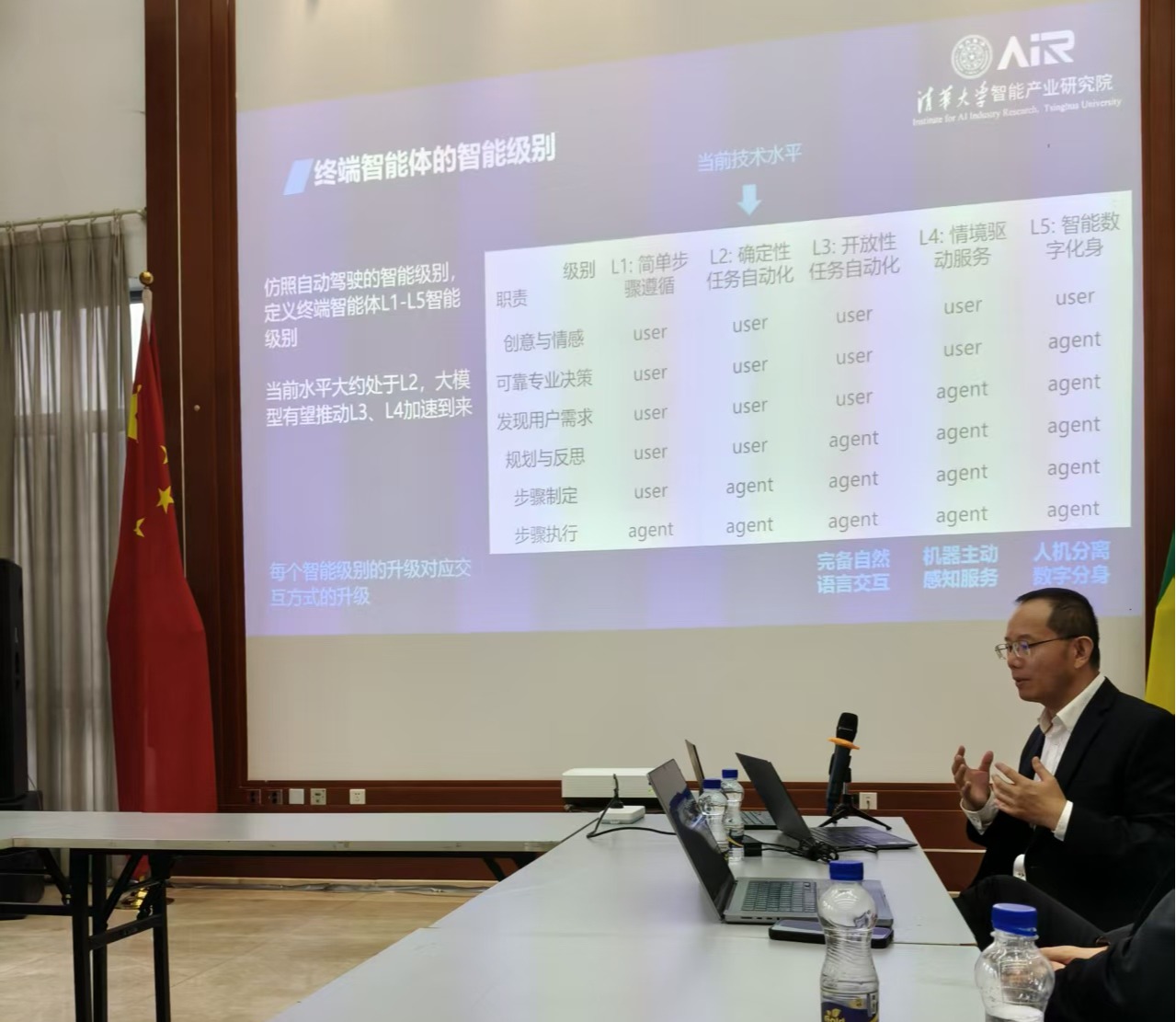
Professor Liu Yunxin delivering a report at the Embassy.
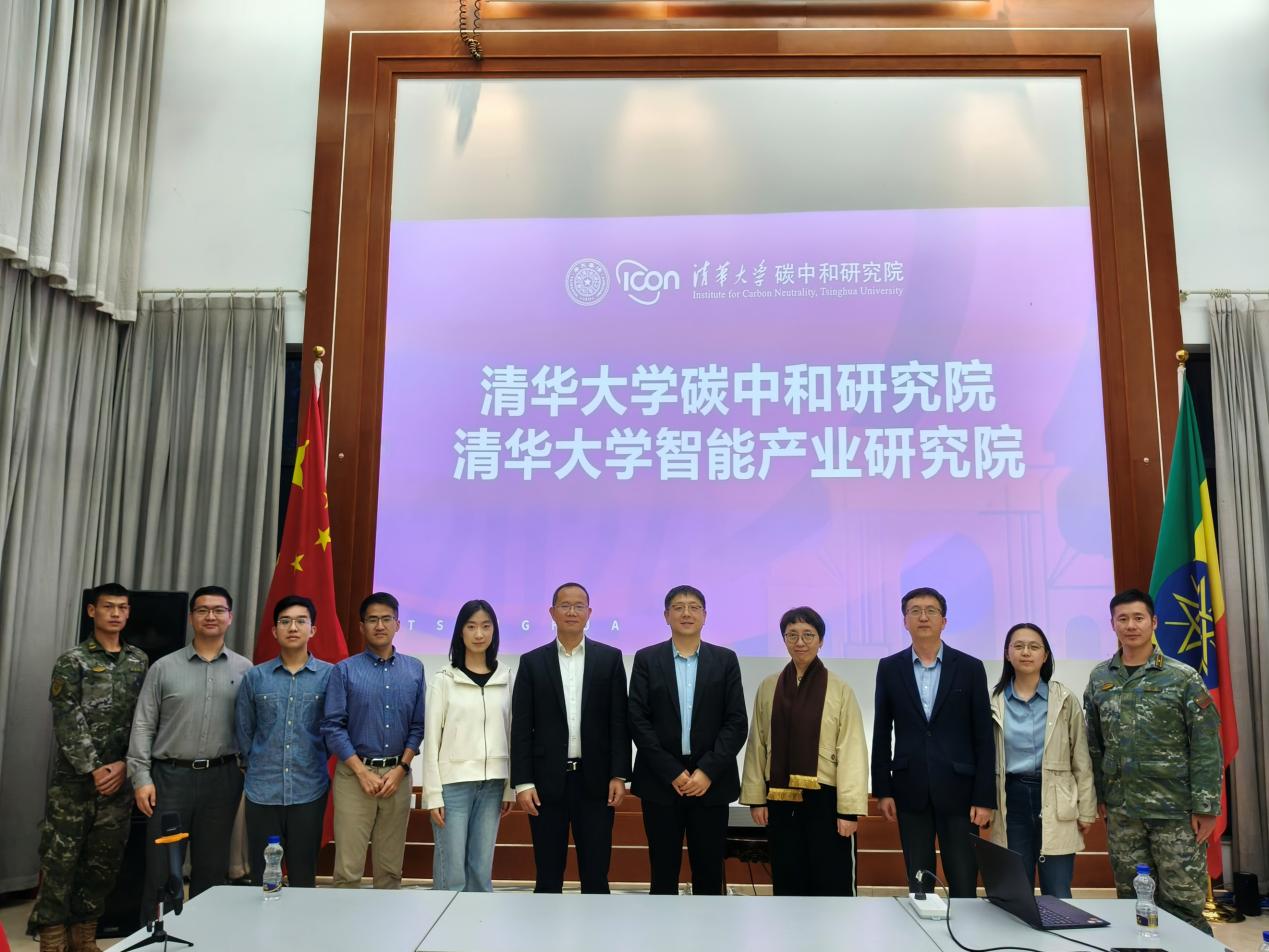
Group photo at the Embassy.
On September 11, the delegation visited the Ethiopia Branch of China Wuyi Co., Ltd. for a corporate research exchange. Mr. Tu Xiongtai, Party Committee Secretary of China Wuyi Ethiopia Branch, extended a warm welcome to Professor Guan Dabo and the delegation, providing a systematic introduction to the company's development history and main business operations. He elaborated on China Wuyi's strategic layout and competitive advantages in overseas markets, highlighting the company's accumulation of extensive international engineering experience and market resources over its long-term development. Concurrently, based on Africa's development needs, he provided an in-depth overview of the overall status of infrastructure construction in Africa. Currently, challenges such as limited technical capacity and uneven regional development exist in African infrastructure construction, but there are also tremendous development opportunities.
Professor Guan Dabo also introduced the team's research work on sustainable buildings. He stated that the construction industry is a crucial pillar of global economic development and a key sector for energy consumption. Over the years, the team has been dedicated to reducing carbon emissions throughout the building lifecycle and has established a regional-level database for operational carbon emissions of individual buildings. He expressed hope that this exchange would serve as a starting point to fully utilize the technological and resource advantages of both sides, promoting the upgrading and transformation of infrastructure construction towards low-carbon and green directions in more countries and regions, achieving sustainable development.
During this exchange visit, all parties expressed willingness to actively promote multi-level and multi-form academic exchanges and joint research activities in the future, strengthen talent cultivation and capacity building in the fields of carbon neutrality and low-carbon technologies. They look forward to jointly promoting low-carbon development, technological progress, and sustainable cooperation through collaboration to address global climate challenges.


 Latest recommendations