From September 19 to 21, the world's first megawatt-class high-altitude wind power system — the S1500 Floating Wind Power System (SAWES) — jointly developed by Tsinghua University's Department of Electrical Engineering, Linyiyunchuan, and the Aerospace Information Research Institute under the Chinese Academy of Sciences (AIRCAS), successfully completed its maiden flight at the Naomaohu Base in Hami, Xinjiang. This test flight focused on evaluating the performance of the floating platform, including assembly, configuration pressure tests, and deployment/recovery operations under strong winds day and night. The results lay a solid foundation for further comprehensive testing and operational power generation of the system.
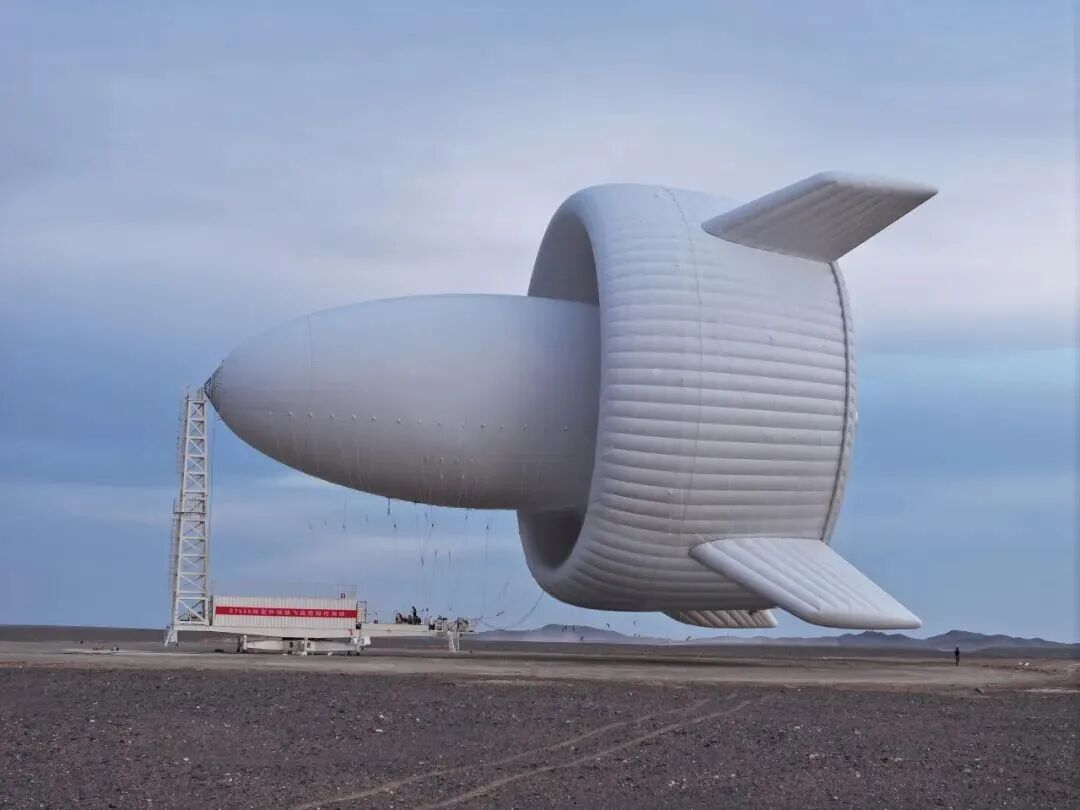
The S1500 system, which achieved this successful flight, is currently the world's largest and highest-power floating high-altitude wind power device. The system measures 60 meters in length, 40 meters in width, and 40 meters in height, exceeding the size of a standard basketball court. Its unique aerodynamic design combines a main airbag with an annular wing structure, forming a giant ducted shape that not only enhances flight stability but also significantly improves wind energy capture efficiency. The system is equipped with 12 interconnected 100-kilowatt wind turbine units, with a total designed rated power exceeding 1 megawatt. Electricity is safely transmitted to the ground grid via high-strength, lightweight tethering cables.
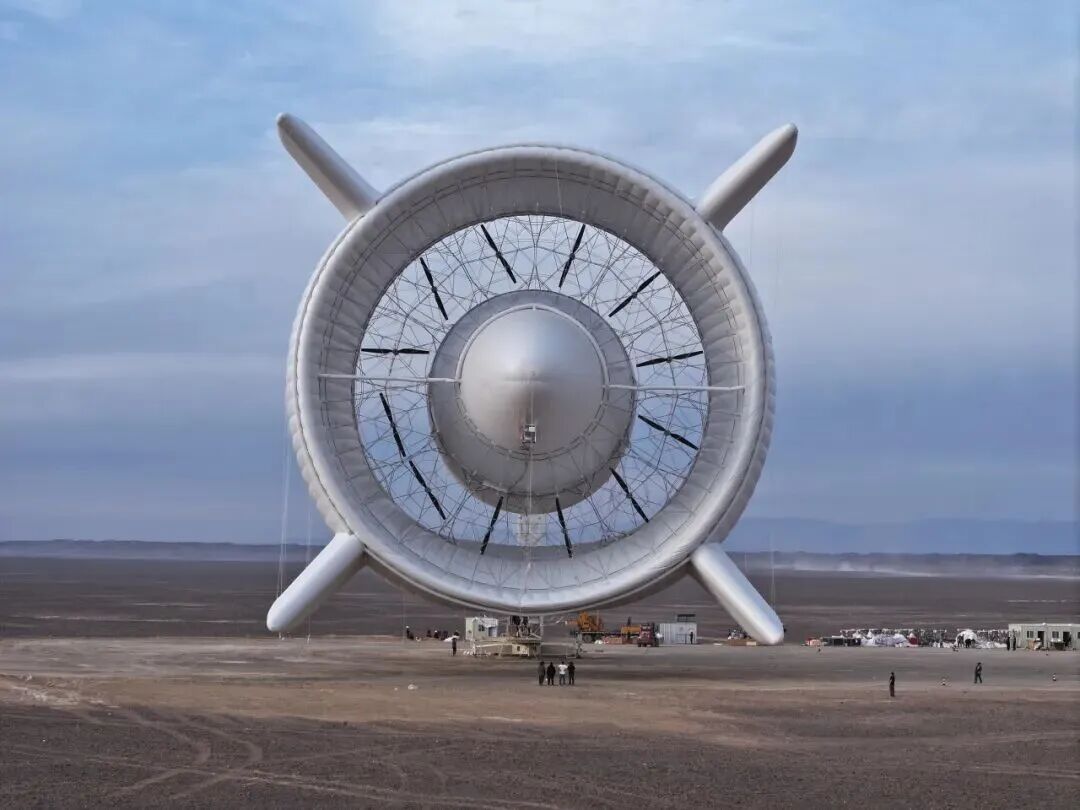
The research team, led by Professor Lu Chao from the New-type Power System Research Center of Tsinghua University's Institute for Carbon Neutrality and the Department of Electrical Engineering, with participation from faculty members including Wang Shanming, Yuan Zhichang, Liu Di, and Liu Wenmao, was primarily responsible for the electrical design and core technological breakthroughs of the S1500 megawatt-class system. This work built upon their previous support in developing kilowatt-class, hundred-meter-altitude systems like the S500 and S1000. Key technologies addressed include high-power-density generator design, lightweight power conversion architecture and topology innovation, power transmission stability analysis, and air-ground coordinated control.
The successful maiden flight of the S1500 Floating Wind Power System not only represents a significant breakthrough in the field of high-altitude wind power generation but also establishes a critical technological foundation for future larger-scale and longer-duration high-altitude wind power experiments and demonstration applications.


 Latest recommendations