On October 11, the 17th US-China Green Energy Forum (UCGEF2025) opened in Hengqin, Guangdong Province. He Kebin, Academician of the Chinese Academy of Engineering and Dean of the Tsinghua University Institute for Carbon Neutrality, attended the forum and delivered a keynote speech.
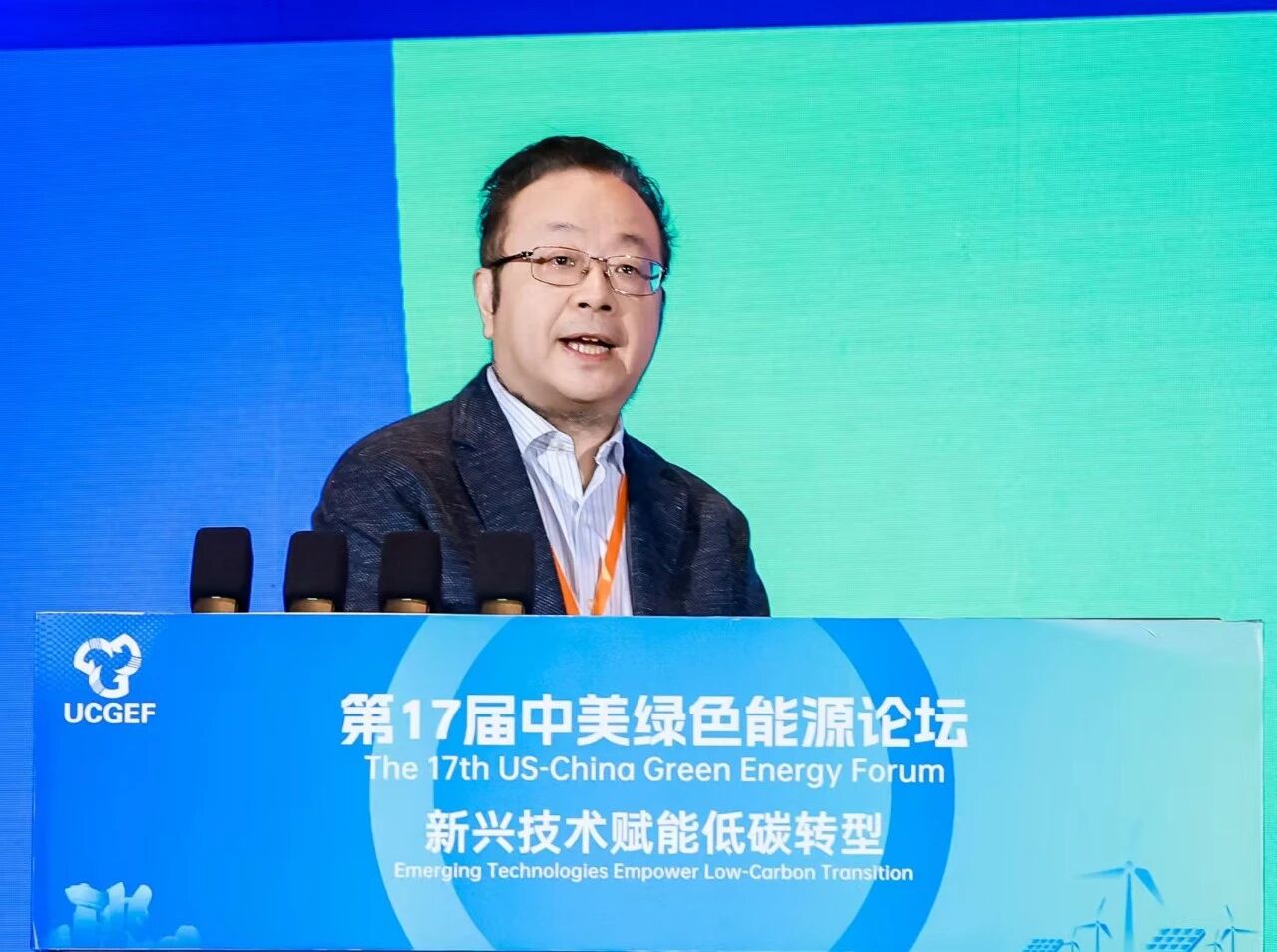
He Kebin Delivering the Keynote Speech
He Kebin delivered a keynote speech titled "Technological Innovation for Carbon Neutrality Systems." He introduced the "Carbon Neutrality and Energy System Transformation" (CNEST) multilateral cooperation program, jointly initiated by Tsinghua University and multiple top-tier institutions both domestically and internationally. The CNEST program proposes a development model for future energy systems. This model is based on global carbon flow monitoring, integrating energy flow, carbon flow, material flow, and information flow. It leverages big data and artificial intelligence technologies to fully tap the optimization potential across all stages of the energy system—production, supply, storage, and consumption—thereby optimizing its operation and facilitating its transformation and upgrading. This aims to establish new theories for energy system transition. The CNEST program will foster an international, open innovation ecosystem for energy systems, build a global research platform, and pool strengths from universities, research institutions, enterprises, and international organizations to support the national "Dual Carbon" strategy and contribute to achieving global carbon neutrality.
During the forum, He Kebin exchanged views with Steven Chu, 1997 Nobel Laureate in Physics, member of the US National Academy of Sciences, Foreign Member of the Chinese Academy of Sciences, and Professor of Physics at Stanford University; and Brian Schmidt, 2011 Nobel Laureate in Physics, Fellow of the Australian Academy of Science, and former Vice-Chancellor of the Australian National University. They discussed technological innovations and challenges related to energy system transition and explored future directions for international cooperation under the CNEST program.
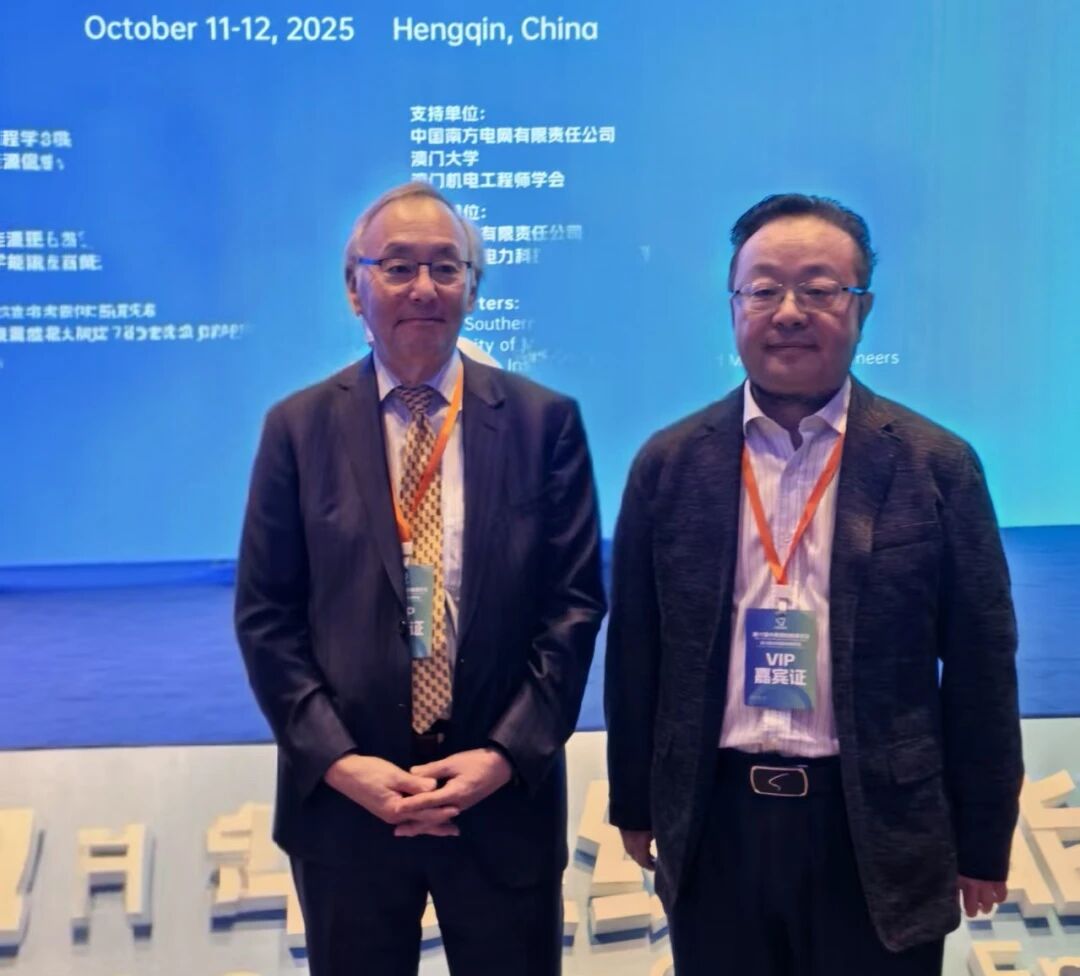
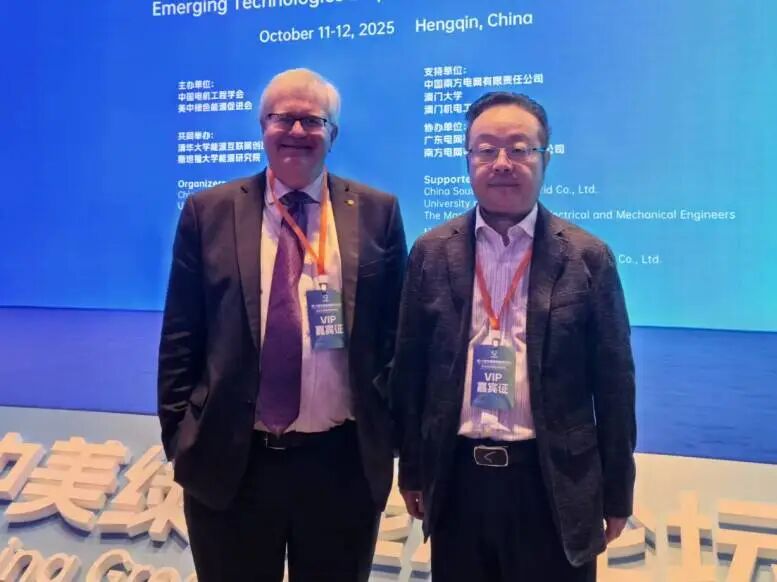
He Kebin in Discussion with Steven Chu and Brian Schmidt
The 17th US-China Green Energy Forum was held in Hengqin, Guangdong Province, on October 11-12, 2025. The forum invited Nobel laureates and leading Chinese and international academicians and scholars to deliver keynote speeches and participate in high-level innovation dialogues, alongside organizing thematic parallel sessions. Experts and scholars from the energy and power sectors engaged in in-depth discussions on the theme of empowering the low-carbon transition with emerging technologies, sharing the latest technological advancements and practical experiences. The collective aim is to contribute to achieving the carbon peak and carbon neutrality goals, accelerate the clean and low-carbon transformation of energy systems, and promote green and sustainable development.
At the forum on the morning of October 11, Guo Jianbo, Academician of the Chinese Academy of Engineering, Vice Chairman of the Chinese Society for Electrical Engineering, and Honorary President of the China Electric Power Research Institute, delivered the opening address and a keynote speech. Steven Chu, Brian Schmidt, and He Kebin presented keynote reports. A high-level innovation dialogue featured Rodi Guidero, Executive Director of Breakthrough Energy and Managing Partner of Breakthrough Energy Ventures; Song Yonghua, Rector of the University of Macau, Fellow of the Royal Academy of Engineering (UK), and Foreign Member of the European Academy of Sciences; Li Peng, Chief AI Officer and Chief Technical Expert of China Southern Power Grid; Zhu Jizhong, Professor at South China University of Technology, Member of the European Academy of Sciences and Arts, and Foreign Member of the Academy of Sciences of Bologna, Italy; and Zhu Fahua, Chief Environmental Protection Scientist of China Energy Investment Corporation and Foreign Member of the Russian Academy of Natural Sciences. The forum sessions were chaired by Chen Mei, Vice Chairman of the Chinese Society for Electrical Engineering, and Rao Hong, Academician of the Chinese Academy of Engineering and Chief Scientist of China Southern Power Grid Co., Ltd., respectively.


 Latest recommendations