On November 21, the Chinese Academy of Sciences (CAS) and the Chinese Academy of Engineering (CAE) announced the results of the 2025 academician elections. Professor Luo Guangsheng, Chief Scientist of the Industrial Deep Decarbonisation Research Center at the Institute for Carbon Neutrality(ICON), and Professor from the Department of Chemical Engineering,Tsinghua University, was elected an academician of the Chinese Academy of Sciences. Two experts from the Joint Pollution Control and Carbon Reduction Research Center—Professor Zhang Qiang from the Department of Earth System Science, elected an academician of the Chinese Academy of Sciences, and Professor Li Junhua from the School of Environment, elected an academician of the Chinese Academy of Engineering.
Newly Elected Academicians of the Chinese Academy of Sciences
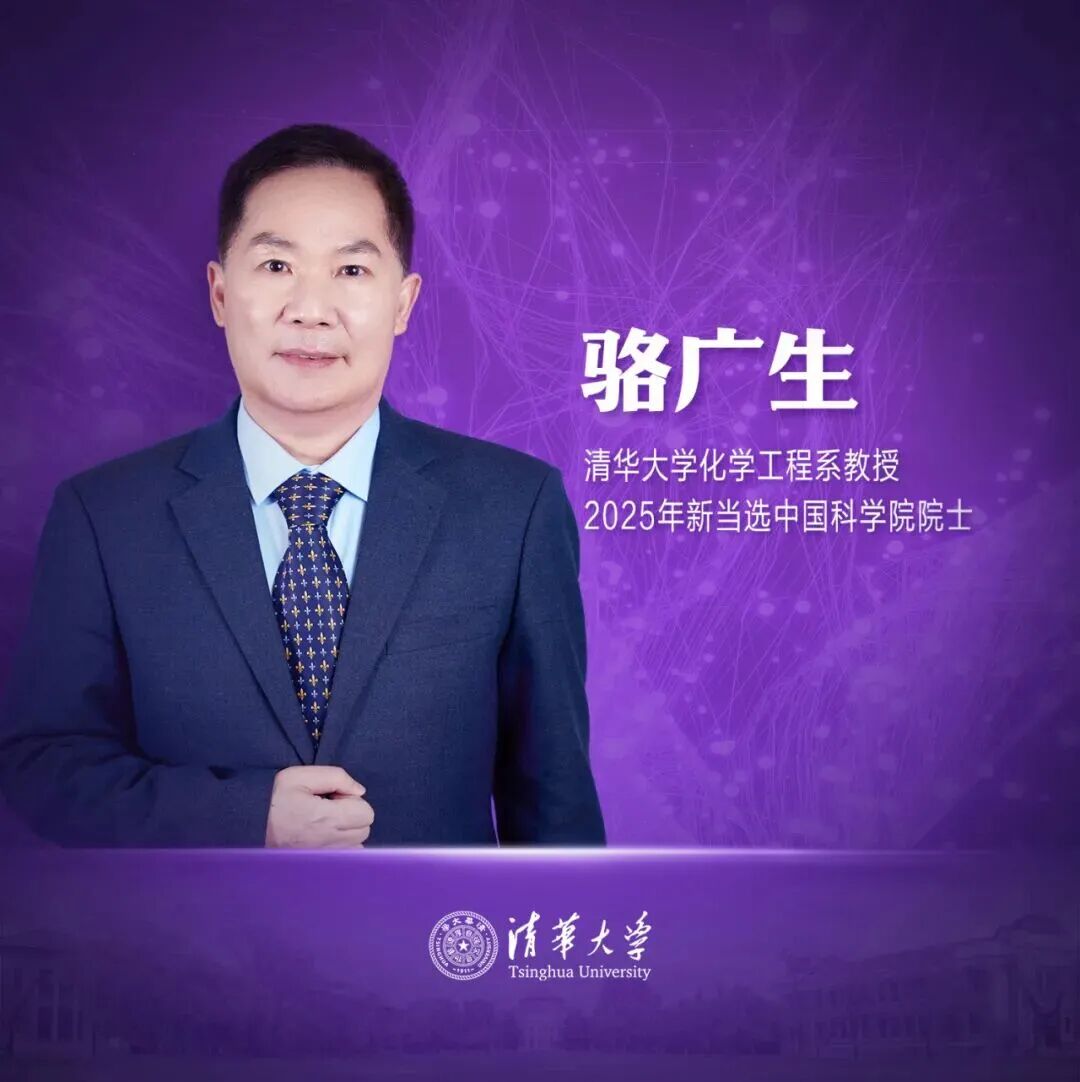
Luo Guangsheng
Industrial Deep Decarbonisation Research Center, Institute for Carbon Neutrality
Department of Chemical Engineering
Luo Guangsheng, born in November 1964, received his bachelor's and doctoral degrees from the Department of Chemical Engineering, Tsinghua University, in 1988 and 1993, respectively. He has been working in the Department of Chemical Engineering, Tsinghua University, since graduation. He is currently a professor in the Department of Chemical Engineering, Tsinghua University, and Director of the National Key Laboratory of Chemical Engineering and Low-Carbon Technology. He is supported by the National Science Fund for Distinguished Young Scholars, appointed as a Distinguished Professor under the Chang Jiang Scholars Program of the Ministry of Education, elected as a Fellow of the Chemical Industry and Engineering Society of China and a Fellow of the Royal Society of Chemistry, and serves as the Chair of the Microchemical Technology Professional Committee of the Chemical Industry and Engineering Society of China.
He has long been engaged in research on microchemical technology, microscale flow chemistry, and separation science and technology, making pioneering contributions to the transition of microchemical technology from fundamental research to industrial application. He proposed the academic concept that the characteristics of microchemical engineering are primarily determined by "microscale and interface effects." Guided by this concept, he led his team to conduct systematic fundamental research, constructing a microchemical engineering theoretical system that systematically describes the mechanisms and laws of microscale "momentum, heat, and mass transfer with reaction." He invented various high-performance micro-components and high-throughput micro-equipment, proposed scientifically practical methods for micro-equipment scale-up and strategies for constructing microchemical systems, and developed several groundbreaking microchemical technologies. These technologies have been successfully applied in over 20 production lines of enterprises such as Guizhou Phosphate Chemical Group, leading and advancing China's industrial application of microchemical technology to the international forefront.
His research achievements have earned him the Second Prize of the State Technological Invention Award and the Second Prize of the State Scientific and Technological Progress Award. He has received honors such as National Outstanding Scientific and Technological Worker, the Hou Debang Chemical Innovation Award from the Chemical Industry and Engineering Society of China, Supervisor of the National Excellent Doctoral Dissertation, and Beijing Outstanding Teacher. He has been named a Tsinghua University "Good Teacher and Friend" multiple times and was among the first inductees into the Tsinghua University "Good Teacher and Friend" Hall of Fame.
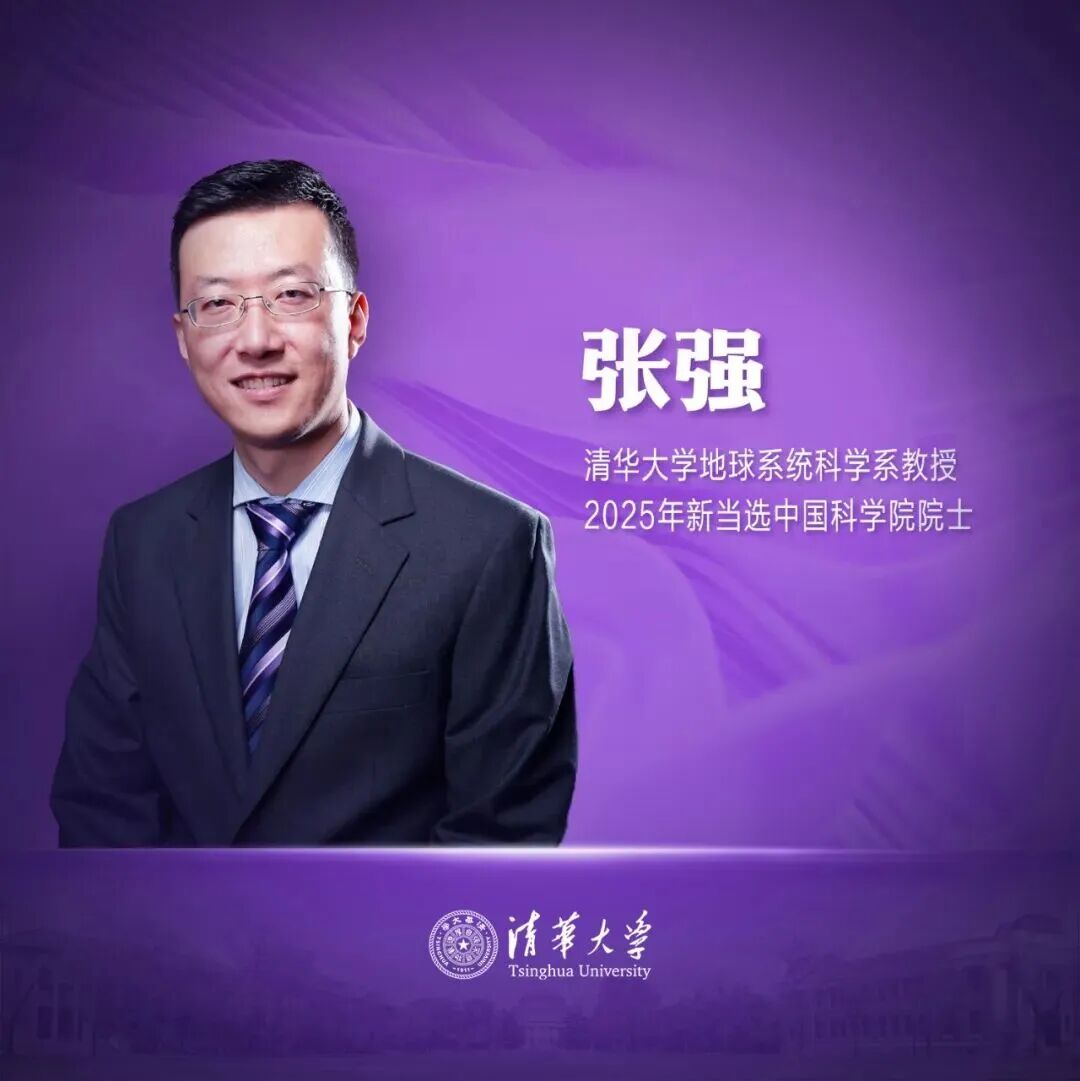
Zhang Qiang
Joint Pollution Control and Carbon Reduction Research Center, Institute for Carbon Neutrality
Department of Earth System Science
Zhang Qiang, born in October 1977, received his bachelor's and doctoral degrees from Tsinghua University in 2000 and 2006, respectively. From 2006 to 2009, he conducted postdoctoral research at Argonne National Laboratory in the United States. He has been working at Tsinghua University since 2009. He is currently a professor and Associate Head of the Department of Earth System Science, Tsinghua University. He is supported by the National Science Fund for Distinguished Young Scholars, appointed as a Distinguished Professor under the Chang Jiang Scholars Program of the Ministry of Education, and serves as the Academic Leader for both an Innovative Research Group and an Excellent Research Group funded by the National Natural Science Foundation of China.
He has long been engaged in research on atmospheric composition changes and atmospheric environmental effects, achieving systematic and original scientific results and making outstanding contributions to exploring the complex interrelationships between human activities and atmospheric composition. He constructed a refined and dynamic technical system for characterizing atmospheric emission sources and created a multi-scale emission inventory model; the emission inventory data products he developed are widely used by the academic community. He developed new multidisciplinary and cross-coupling methods, revealed the driving factors of atmospheric composition changes in China and their environmental and health effects, and elucidated the nonlinear correlation mechanisms between human activities and atmospheric composition changes. He constructed strategies for enhancing the climate adaptation and resilience of global wind and solar power systems and proposed medium- to long-term pathways for China's future air quality improvement under the Dual Carbon Goals, providing a theoretical basis for scientifically addressing climate change and air pollution.
His achievements have supported the top-level design, implementation tracking, and effect evaluation of the national clean air action plan and have been directly applied to the establishment and operation of the national atmospheric emission source inventory system. He has received the Second Prize of the State Natural Science Award, the Second Prize of the State Scientific and Technological Progress Award, the Science Exploration Prize, the China Youth Science and Technology Award, and the Cozzarelli Prize from the Proceedings of the National Academy of Sciences of the United States of America.
Newly Elected Academician of the Chinese Academy of Engineering
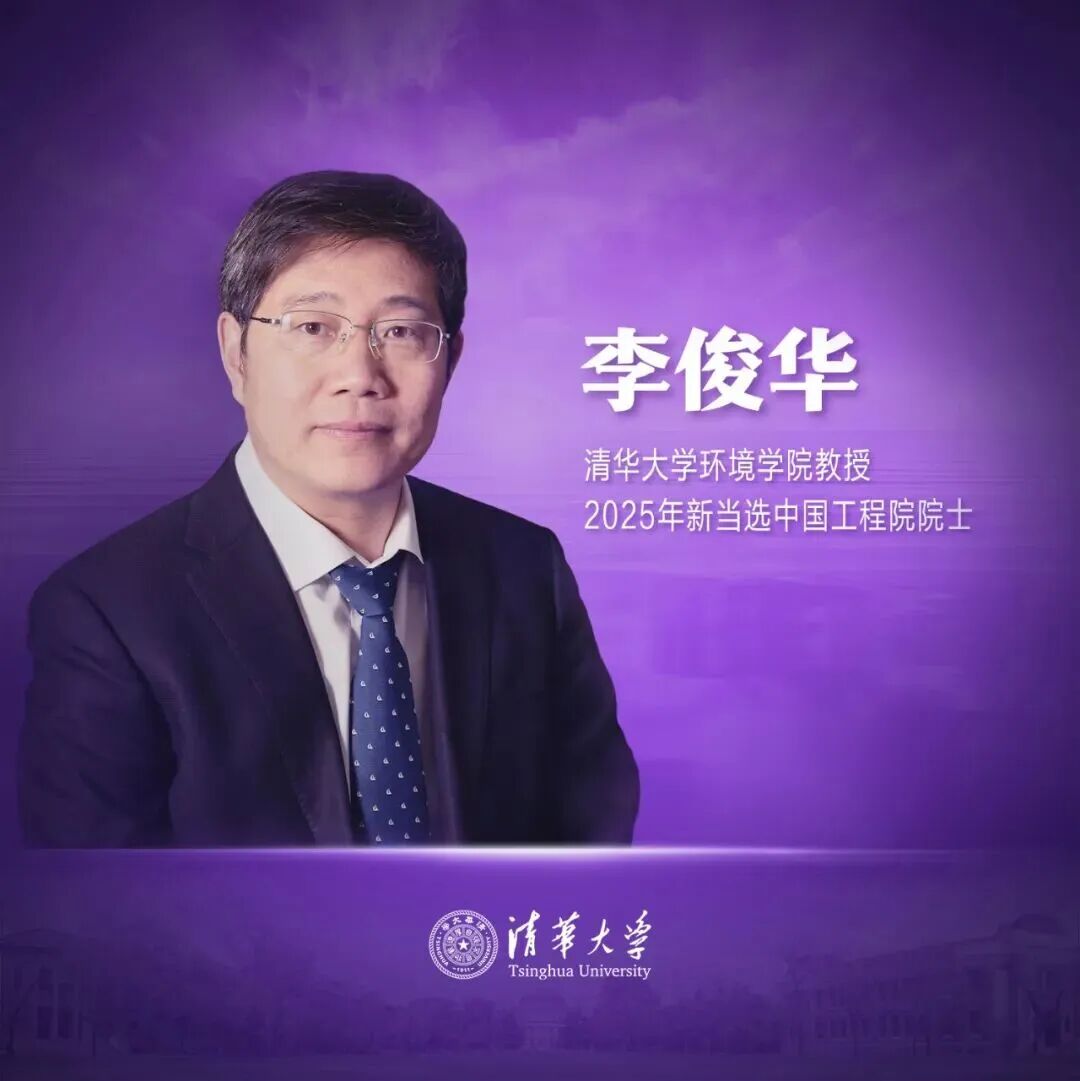
Li Junhua
Joint Pollution Control and Carbon Reduction Research Center, Institute for Carbon Neutrality
School of Environment
Li Junhua, born in Linxian County (now Linzhou City), Henan Province, in September 1970. He graduated from Jilin University with a bachelor's degree in 1992. He received his master's and doctoral degrees in engineering from the China Institute of Atomic Energy in 1997 and 2001, respectively. In 2002, he conducted postdoctoral research in the Department of Environmental Science and Engineering, Tsinghua University, and joined the faculty after completing his postdoctoral work in 2003. He is supported by the National Science Fund for Distinguished Young Scholars, appointed as a Distinguished Professor under the Chang Jiang Scholars Program of the Ministry of Education, and selected as one of the first batch of national-level leading talents in technological innovation. He is currently a professor at the School of Environment, Tsinghua University, and Director of the National Engineering Research Center for Synergistic Control of Atmospheric Pollutants and Greenhouse Gases.
He has long been dedicated to the deep treatment of atmospheric pollutants and greenhouse gases in key industries. He has achieved breakthroughs in theories, key technologies, and major equipment for the synergistic control of multiple pollutants in flue gas and greenhouse gas reduction in key industries such as electric power, metallurgy, building materials, and petrochemicals. He has established a series of demonstration projects in groups such as National Energy Group, Baowu Steel, China National Building Materials Group, and Sinopec, making outstanding contributions to solving the technical challenges of the world's strictest ultra-low emission projects, promoting scientific and technological progress and industrial upgrading, and achieving significant economic, social, and environmental benefits.
He has published over 590 academic papers, with an H-index of 108, and has been named a Clarivate Analytics "Highly Cited Researcher" and an Elsevier "Most Cited Chinese Researcher." He has authored three academic monographs, including "Technologies and Engineering Applications for Deep Treatment of Multiple Pollutants in Industrial Flue Gas," and holds 81 authorized invention patents. As the principal contributor or team leader, he has received one First Prize of the State Scientific and Technological Progress Award, one Second Prize of the State Technological Invention Award, the National Outstanding Engineer Team Award, and the Ho Leung Ho Lee Foundation Scientific and Technological Innovation Award.


 Latest recommendations