On November 27, DE Mongolia Group paid another visit to the Institute for Carbon Neutrality, Tsinghua University(ICON, Tsinghua). Building upon previous full communication and exchanges, the two sides engaged in in-depth discussions on cooperation in the fields of carbon neutrality and energy transition, and officially signed the "Memorandum of Understanding on Cooperation between the Institute for Carbon Neutrality, Tsinghua University, and DE Mongolia Group." The delegation from DE Mongolia was jointly led by Dash Enkhbayar, CEO of the Group, and Eden Cai, Advisor. Wang Zhe, Associate Dean of the ICON and Sun Xin, Researcher, attended the talks. In a brief and solemn signing ceremony, both sides formally completed the signing of the Memorandum, marking a new phase in their cooperation.
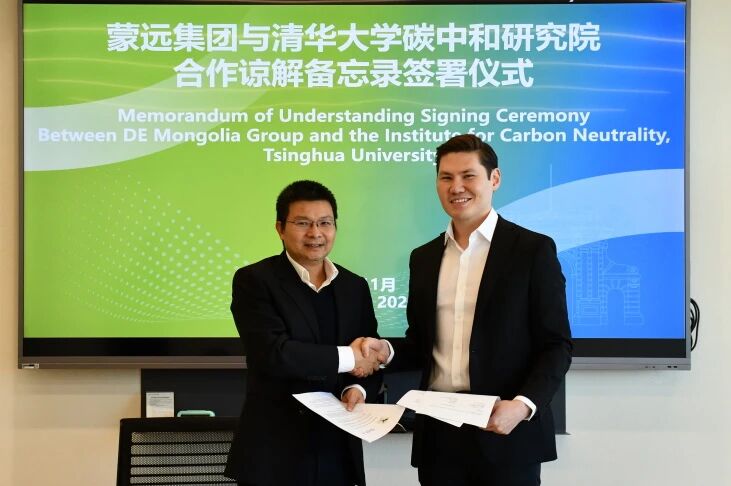
Signing Ceremony
During the meeting, Wang Zhe introduced the overall positioning and construction progress of the "Carbon Neutrality and Energy System Transformation" (CNEST) Multilateral Collaboration Program. He pointed out that achieving carbon neutrality requires strengthening cross-sectoral and cross-regional scientific and technological synergies on a global scale to address the complexity and systemic challenges of the energy transition.
Dash Enkhbayar introduced his work in international cooperation and strategic affairs undertaken for relevant Mongolian government institutions, as well as DE Mongolia Group's main arrangements in green technology investment, cross-border innovation, and regional synergy. He stated that DE Mongolia Group attaches great importance to the potential for cooperation with Tsinghua University in the fields of energy transition and sustainable development, expressing a particular hope for long-term and pragmatic collaboration with China in scientific research, technology, and demonstration applications under the multilateral cooperation framework of CNEST.
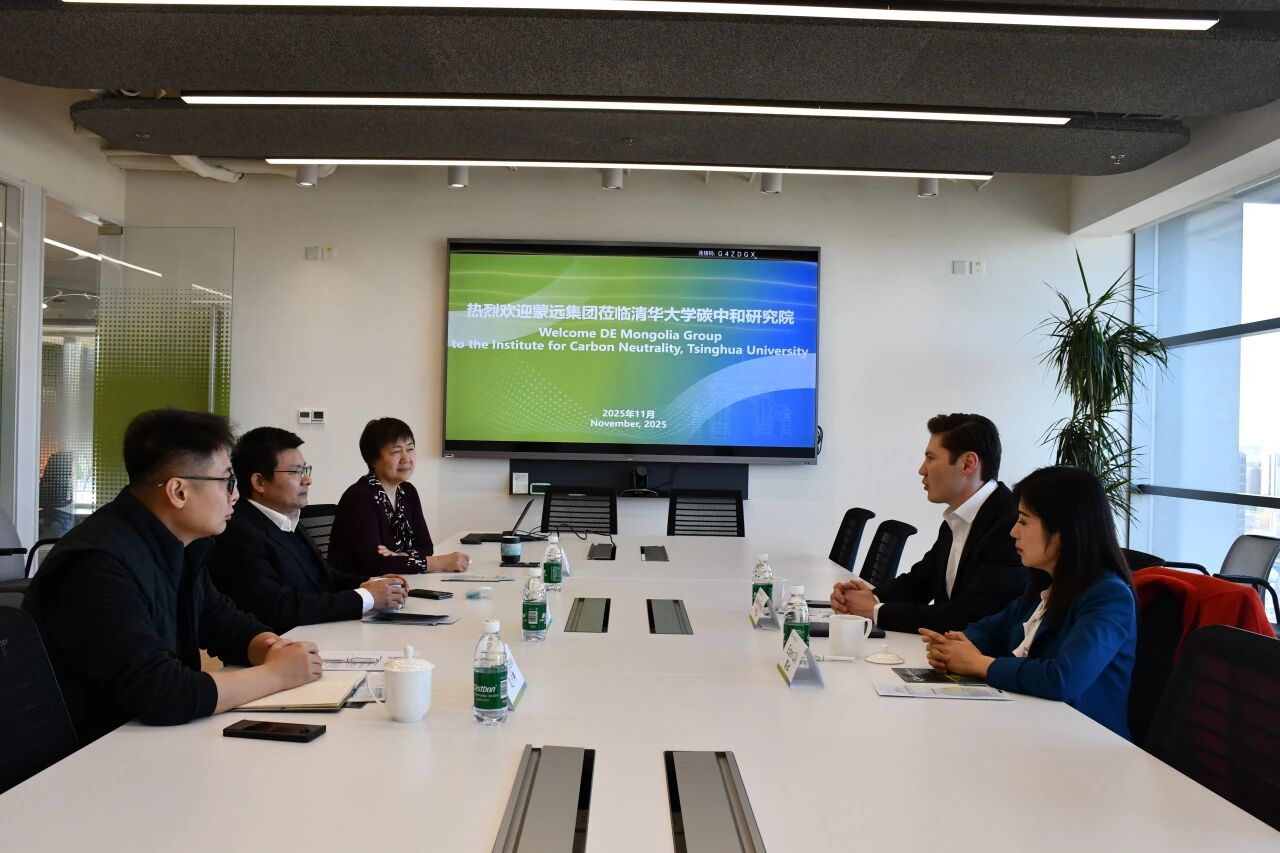
Meeting Scene
Simultaneously with the signing of the MOU on cooperation, both sides also exchanged views on future directions for collaboration. Discussions focused on the possibilities for advancing scientific research collaboration within the CNEST framework and explored opportunities for cooperation related to Mongolia's Kharkhorum New City Project in the areas of energy, green technology, and sustainable planning. Both sides agreed that this project holds significant demonstrative value for optimizing regional energy structures, applying clean energy, and developing future cities, providing a solid foundation for further cooperation. The signing of this Memorandum will also lay a strong foundation for pragmatic cooperation between the two sides in the fields of energy system transformation, green technology innovation, and regional sustainable development.


 Latest recommendations