On the afternoon of September 26, 2025, the 48th Carbon Neutrality Academic Salon, themed "Global Critical Minerals Outlook for Low-Carbon Energy Transition Technologies," was successfully held at Weihai Campus of Shandong University. The event was co-organized by the Institute for Carbon Neutrality at Tsinghua University and the Weihai Institute of Interdisciplinary Sciences at Shandong University. The salon was chaired by Professor Zhong Honglin from the Weihai Institute of Interdisciplinary Sciences at Shandong University.
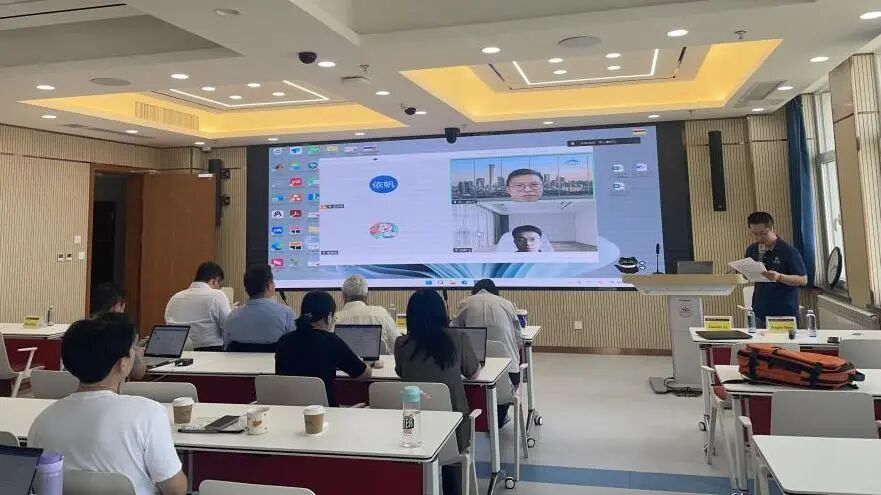
Opening Remarks
In the opening remarks, experts emphasized the critical roles of technological advancement, development prospects, and systematic solutions in addressing resource shortages and risks. These include multi-dimensional pathways such as efficiency improvements, material substitution, and resource recycling.
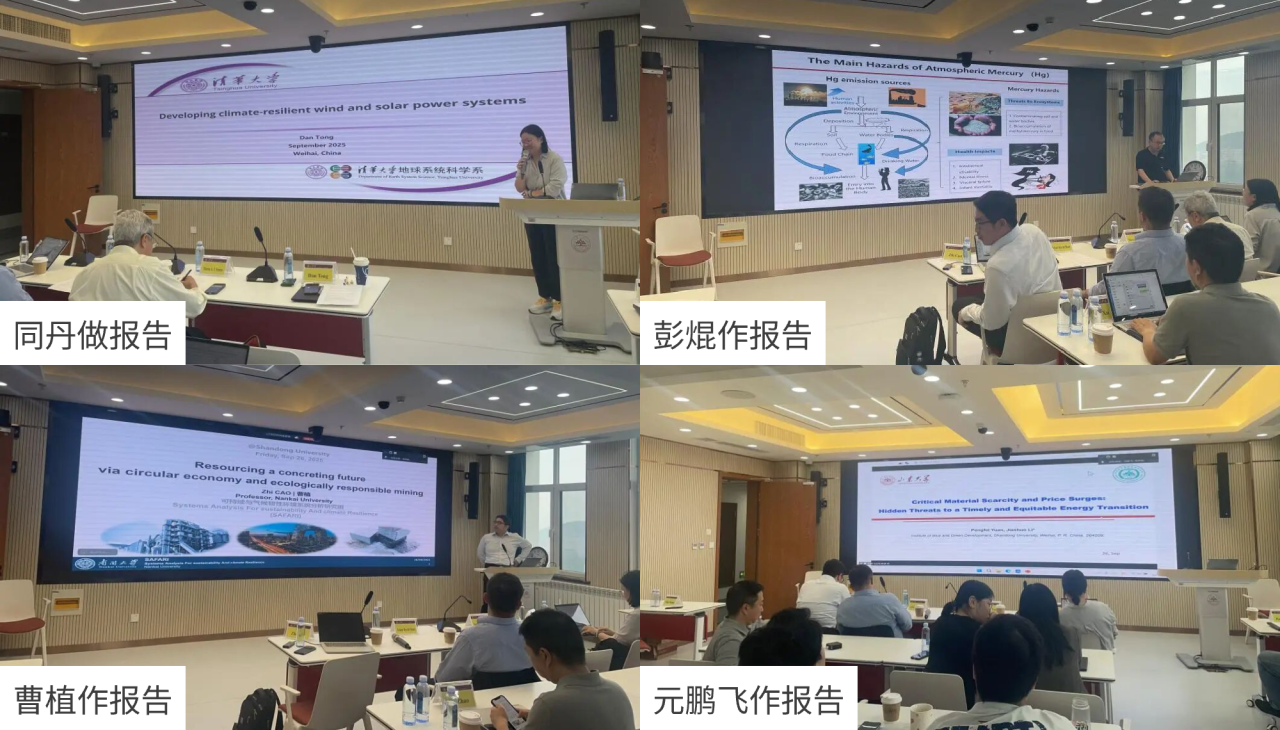
Keynote Reports
Associate Professor Tong Dan from the Department of Earth System Science at Tsinghua University delivered a keynote report titled "Developing climate-resilient wind and solar power systems." Utilizing a coupled climate change-extreme events-energy security analysis framework, she quantified the impacts of climate change on the reliability of global high-penetration wind and solar power systems. She elucidated the scientific principles behind how prolonged windless and low-sunlight extreme events lead to supply-demand imbalances and increased costs in power systems. Based on this, she developed regionally differentiated strategies for enhancing climate adaptation and resilience in global wind and solar power systems.
Postdoctoral researcher Peng Kun from the Weihai Institute of Interdisciplinary Sciences at Shandong University presented a report titled "Low-carbon power transition may shift mercury emissions from coal combustion to nonferrous metal smelting." He elaborated on the inherent linkages between China's low-carbon power transition, critical minerals, and mercury emissions. He pointed out that while the transition is projected to reduce mercury emissions from coal combustion by over 90% (approximately 101.81 tons) between 2021 and 2060, the development of photovoltaics and wind power is driving increased demand for metals such as copper, zinc, and lead. This leads to a doubling of mercury emissions from their smelting processes, cumulatively reaching 370.44 tons, indicating a shift in pollution sources from coal combustion to non-ferrous metal smelting. The research emphasizes that cross-sectoral collaborative governance could achieve a 57% reduction in emissions, highlighting the urgency of strengthening controls over emissions from metal production to promote a sustainable transition.
Professor Cao Zhi from Nankai University, in his report "Resourcing a concreting future via circular economy and ecologically responsible mining," systematically assessed the potential impacts of global resource extraction on biodiversity through material capital simulation and environmental impact forecasting. He pointed out the potential threats mining activities pose to ecosystems and proposed combining ecological conservation planning with circular economy strategies to effectively mitigate related risks.
PhD candidate Yuan Pengfei from the Weihai Institute of Interdisciplinary Sciences at Shandong University presented on "Critical Metal Scarcity and Price Surges: Hidden Threats to a Timely and Equitable Energy Transition." Using an integrated modeling framework, he analyzed the potential impacts of critical material scarcity and price volatility on the global decarbonization process. The study found that rising material prices could delay renewable energy deployment and increase transition costs. Consequently, he proposed building systematic response mechanisms by enhancing material productivity, expanding the application of alternative materials, and strengthening international cooperation.
During the exchange and discussion session, participating scholars engaged in lively discussions on cutting-edge topics related to energy transition and critical materials. The discussions covered multiple dimensions, including the climate resilience of clean energy systems, supply-demand risks of critical metals, ecological impacts of resource extraction, and pathways for circular economy and international cooperation, creating a rich academic atmosphere.
The successful holding of this academic salon provided a high-level exchange platform for experts and scholars from China and abroad. It deepened academic dialogue in the fields of energy transition and critical minerals and yielded many important consensuses and insights.


 Latest recommendations