On March 27, the 12th session of the Carbon Neutrality and Energy System Transformation (CNEST) Frontier Seminar was successfully held at the Institute for Carbon Neutrality, Tsinghua University. The seminar featured Mr. André Guimarães, Executive Director of the Amazon Environmental Research Institute (IPAM) and Civil Society Envoy for the 30th United Nations Climate Change Conference (COP30), who delivered a lecture focusing on cutting-edge practices in Brazilian tropical rainforest conservation and sustainable agriculture. The seminar was hosted by Professor Lu Xi, Assistant Dean of the Institute for Carbon Neutrality, who also presented Mr. Guimarães with a commemorative plaque. Following the lecture, a CNEST MOU signing ceremony and meeting were held between the Institute for Carbon Neutrality, Tsinghua University, and IPAM. Professor Wang Zhe, Deputy Dean of the Institute, and Professor Lu Xi, Assistant Dean, attended the signing ceremony. Both sides will further collaborate on research and exchanges under the CNEST multilateral collaboration program.
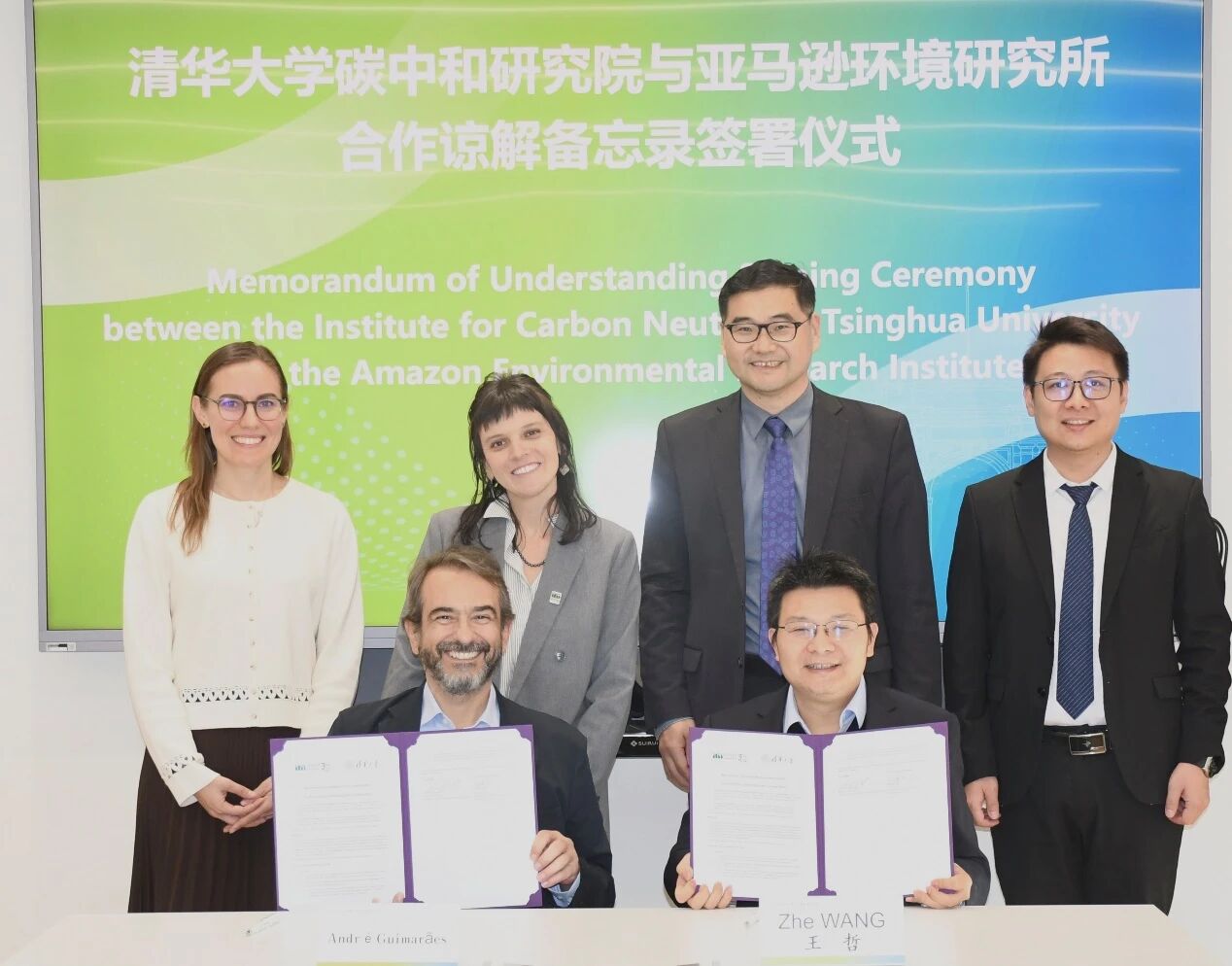
Signing Ceremony
During the lecture, Mr. Guimarães shared insights from IPAM's three decades of work in land management, forest conservation, and sustainable agriculture, highlighting the significance of Brazil's forest protection for global climate action and sustainable agricultural development. He noted that although Brazil's Forest Code requires rural properties to retain 20% to 80% of native vegetation depending on the biome, deforestation and fires remain severe in the Amazon and Cerrado agricultural regions, with climate change already having significant local impacts. Over the past decade, the Xingu region has experienced a temperature rise of approximately 4°C. In the Cerrado region, a major agricultural area, 91% of river basins have lost natural water bodies, temperatures have risen by about 1°C, and aridity has increased by 10%. Approximately 70% of Brazil's farms are projected to leave their ideal climate zones within the next 25 years, placing agricultural production under systemic risk.
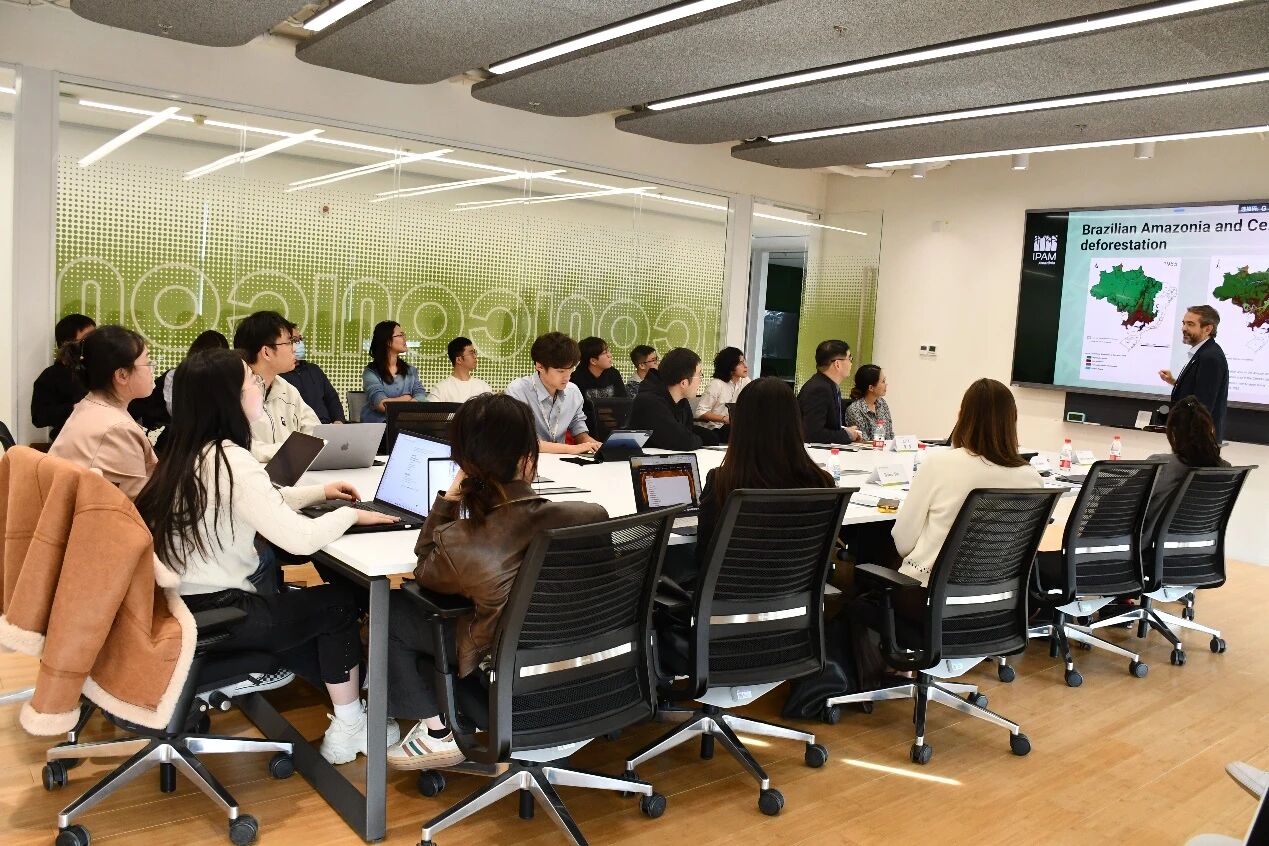
Lecture Scene
He emphasized that native vegetation is not only a cornerstone of climate stability but also directly enhances agricultural productivity. Studies show that soybean fields near forests can see yield increases of up to 20% due to pollination effects. Based on this understanding, IPAM has developed a landscape redesign approach aimed at maximizing the forest-agriculture interface. Within the framework of carbon market mechanisms, IPAM is exploring innovative financial projects to provide economic incentives for farmers to conserve surplus native vegetation. Pilot projects have already protected over 20,000 hectares of native vegetation in the Amazon and Cerrado, simultaneously increasing family farm incomes and reducing deforestation. However, to meet Brazil's Nationally Determined Contribution (NDC) and Forest Code compliance obligations, more than 22 million hectares of native vegetation need restoration, with estimated investments ranging from US$44 billion to US$220 billion. Given this enormous funding gap, carbon markets are a critical support mechanism.
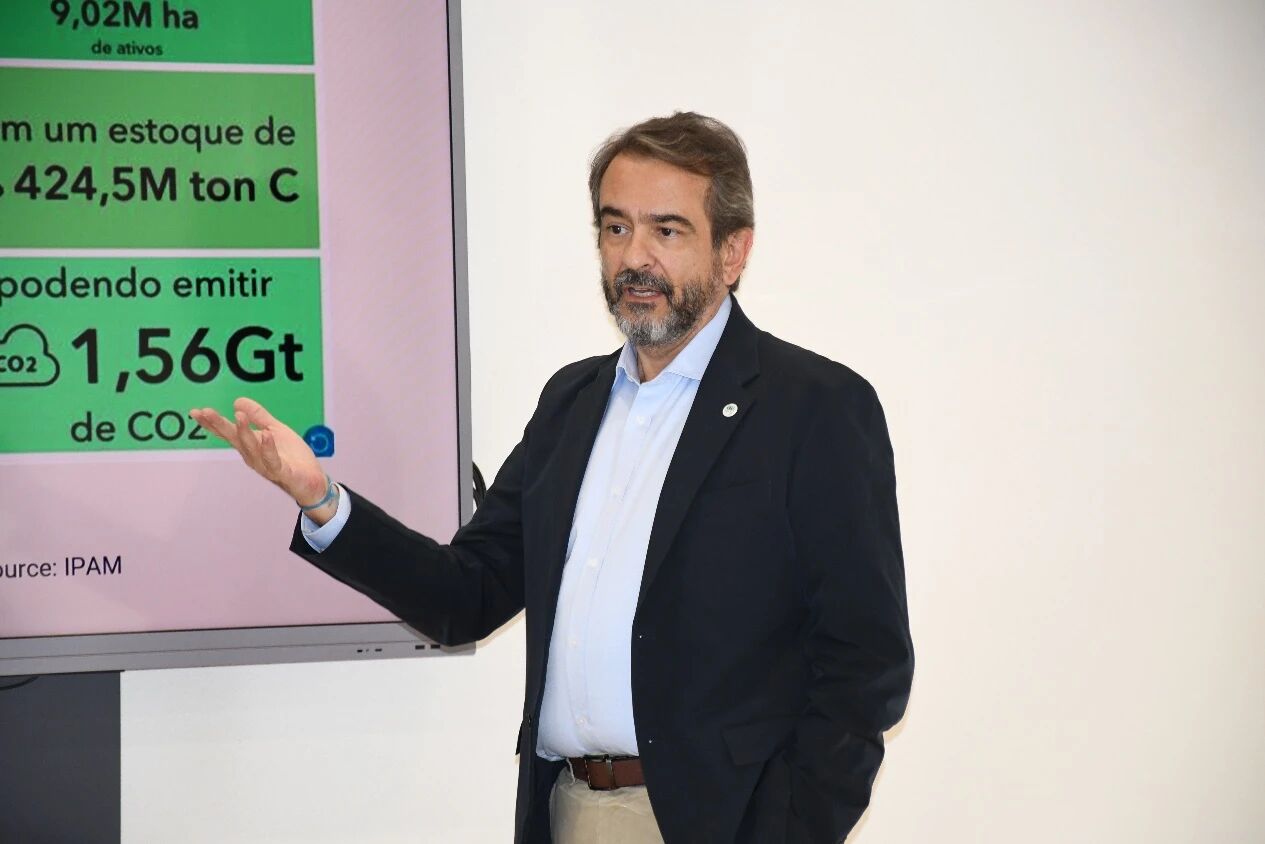
André Guimarães delivering his lecture
Mr. Guimarães pointed out that Brazil and China play pivotal roles in global agricultural supply chains and carbon neutrality. Strengthening knowledge sharing and market alignment between the two countries in sustainable agriculture and forest conservation is crucial for stabilizing the global climate, ensuring food security, and driving a green transition. IPAM will continue its science-based approach, hoping to introduce China's green agricultural technologies to promote implementable institutional innovations that support the development of a more resilient green agricultural economy.
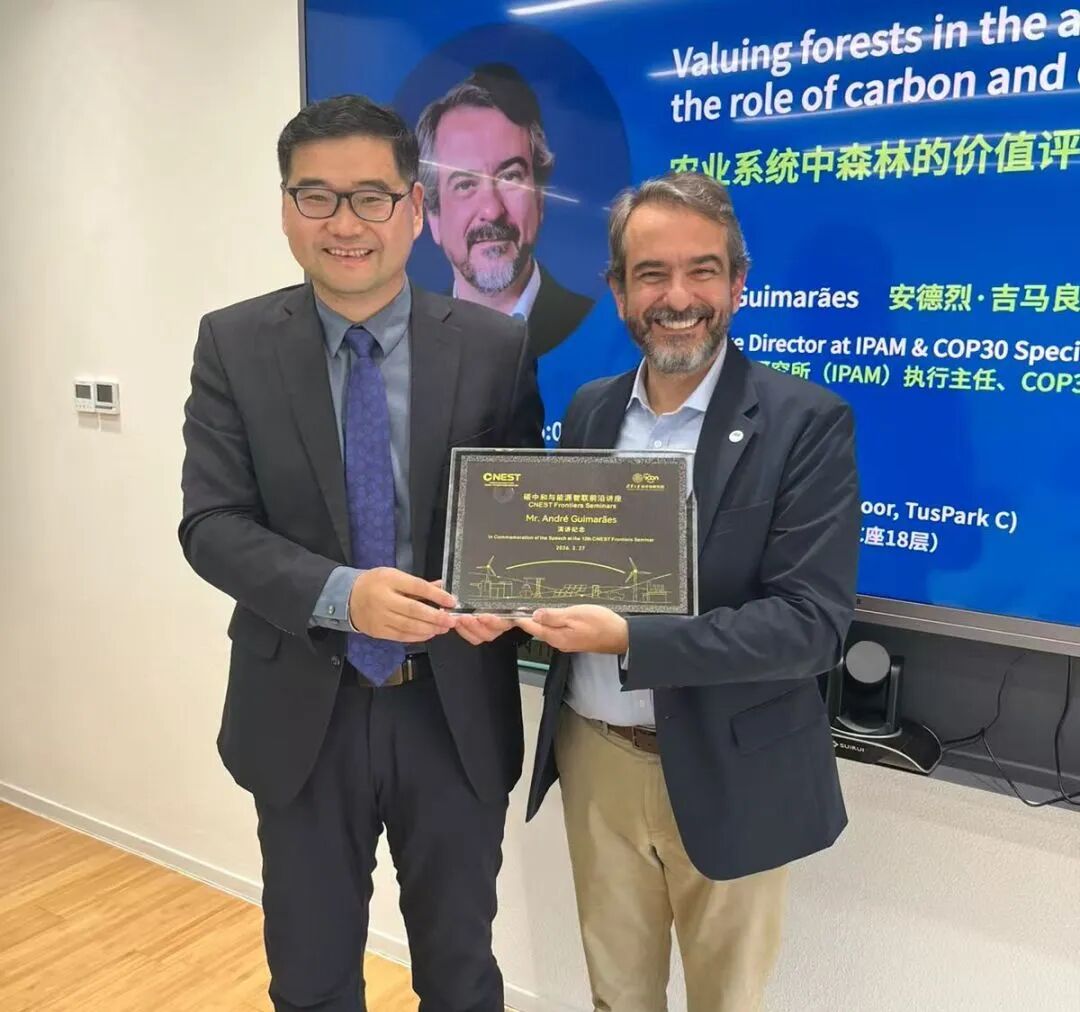
Professor Lu Xi presenting a commemorative plaque to Mr. André Guimarães
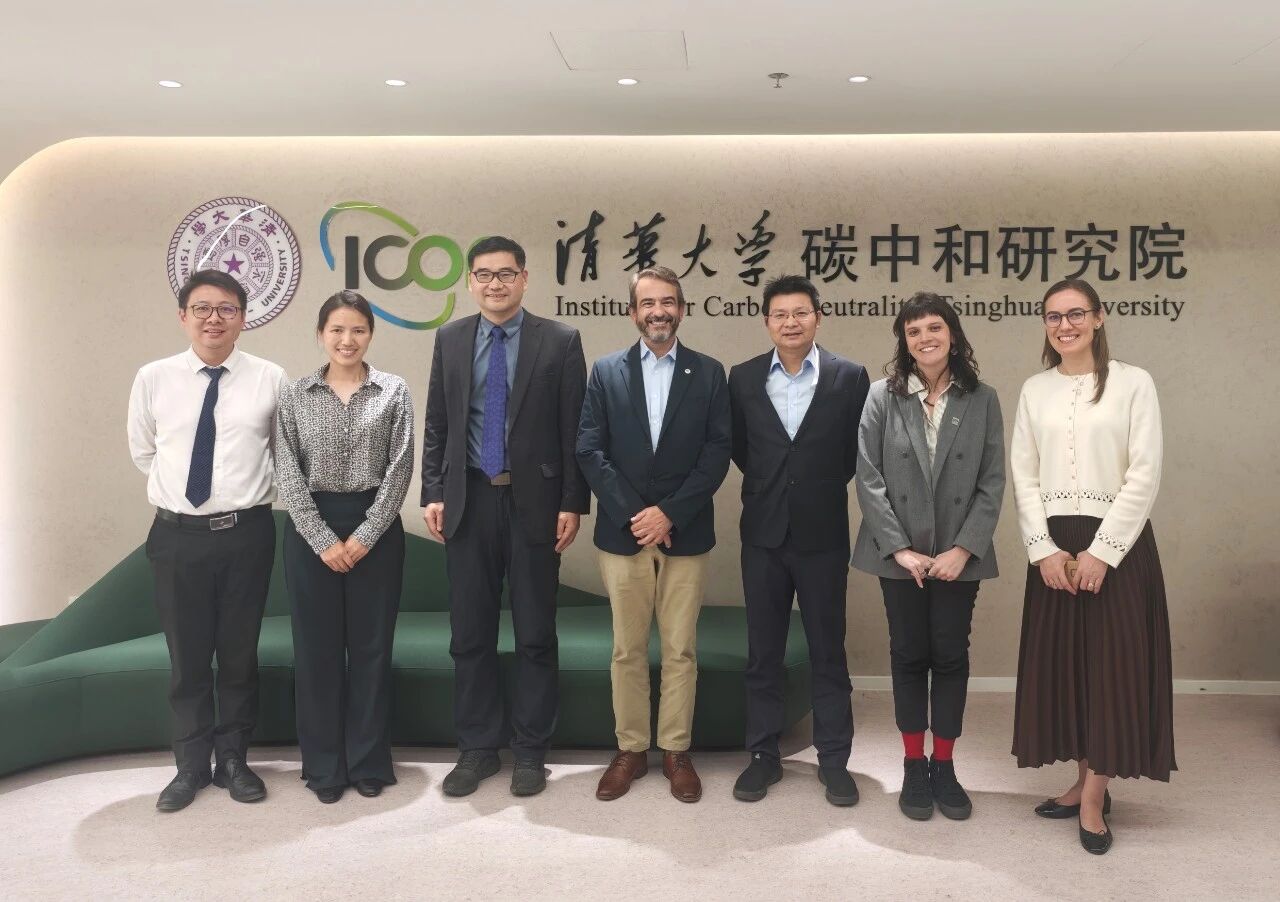
Group photo of some participants
The CNEST Frontier Seminar Series is sponsored by the CNEST multilateral collaboration program initiated by Tsinghua University and the World Carbon Society (in preparation), and organized by the Institute for Carbon Neutrality, Tsinghua University. The series invites renowned experts and scholars from home and abroad to share cutting-edge developments in science, technology, industry, and policy related to carbon neutrality and energy system transformation. IPAM, the invited institution for this session, was founded in 1995 and is headquartered in Belém, Brazil. It maintains six offices in the Amazon and Cerrado regions, employs over 190 staff, and currently oversees 80 ongoing research projects, dedicated to achieving the synergistic development of a healthy environment, prosperous economy, and social equity through science, education, and innovation.


 Latest recommendations