To advance the development of national scenario data systems and enhance integrated assessment capabilities for climate change, on April 12, 2026, under the guidance of the Administrative Center for China's Agenda 21, the "Seminar on Integrated Assessment Models for Climate Change and National Scenario Database" was successfully held in Beijing. The seminar was jointly organized by Peking University, Tsinghua University, the University of Maryland, and Climate Action Partnership. Nearly 300 participants attended in person, including renowned experts from relevant fields, representatives from research institutions and universities, and industry associations, while a cumulative total of over 7,800 viewers watched the live stream online.
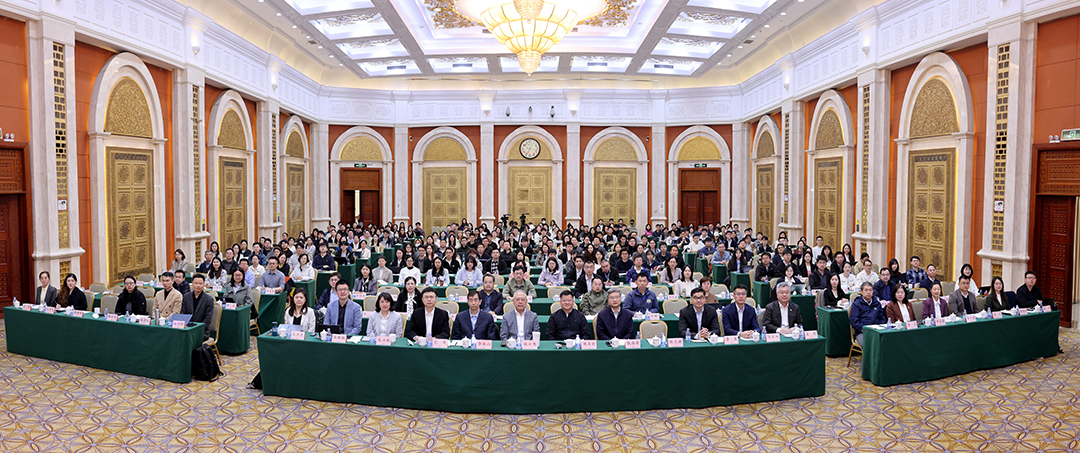
Group Photo
At the opening ceremony of the seminar, Chen Qizhen, Deputy Director-General of the Administrative Center for China's Agenda 21; Professor Zhang Haibin, Deputy Dean of the Institute of Carbon Neutrality, Peking University; Professor Lu Xi, Assistant Dean of the Institute for Carbon Neutrality, Tsinghua University; and Professor Cui Yijun, Research Director of the Center for Global Sustainability, University of Maryland, delivered speeches. In their remarks, the speakers noted that the preparation of the Fifth National Assessment Report on Climate Change has raised higher requirements for the development of national scenario data systems. Against the backdrop of increasing uncertainty in global climate governance, accelerating the enhancement of independent scenario research capabilities has become particularly urgent. Strengthening the synergy between models and foundational data is of great significance for supporting the achievement of China's "dual carbon" goals and national strategic research. The speakers emphasized that efforts should focus on strengthening open-source community development and deepening international exchanges and cooperation to accelerate the construction of an independently controllable, transparent, comparable, and continuously updated national scenario database, thereby comprehensively improving the localized development and collaborative application of integrated assessment models. This will provide solid support for consolidating China's foundational capabilities in climate change integrated assessment, serving national strategic decision-making, and leading global climate governance.
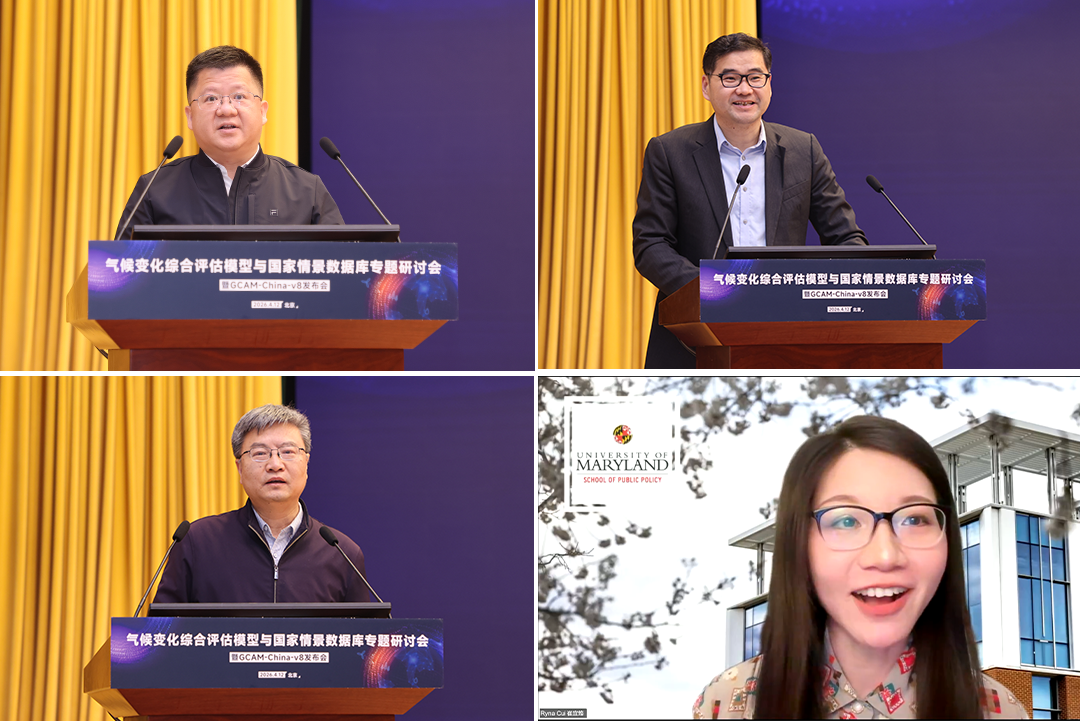
Chen Qizhen, Zhang Haibin, Lu Xi, and Cui Yijun delivering speeches
Zhang Xiaoye, Academician of the Chinese Academy of Engineering and researcher at the Chinese Academy of Meteorological Sciences; Professor Wu Libo from Fudan University; and Professor Feng Kuishuang from the University of Hong Kong delivered keynote speeches focusing on topics such as "China's Climate Change Storylines and Narratives," "AI-Driven Climate Risk Downscaling and Socioeconomic Impact Assessment," and "Low-Carbon Transition Development Pathway Assessment." They systematically presented the latest research progress on the coupling of Earth system models and integrated assessment models, the construction of global emission storylines driven by Chinese scenarios, the application of artificial intelligence for high-resolution climate risk assessment, and the coupling of integrated assessment models with industrial ecology models to support low-carbon transition pathway analysis. The three experts emphasized that, in light of the "dual carbon" goals and the new landscape of global climate governance, further strengthening scenario development, risk characterization, and multi-model coupling research is essential to continuously enhance the capacity of integrated assessment models to support scientific research and decision-making.
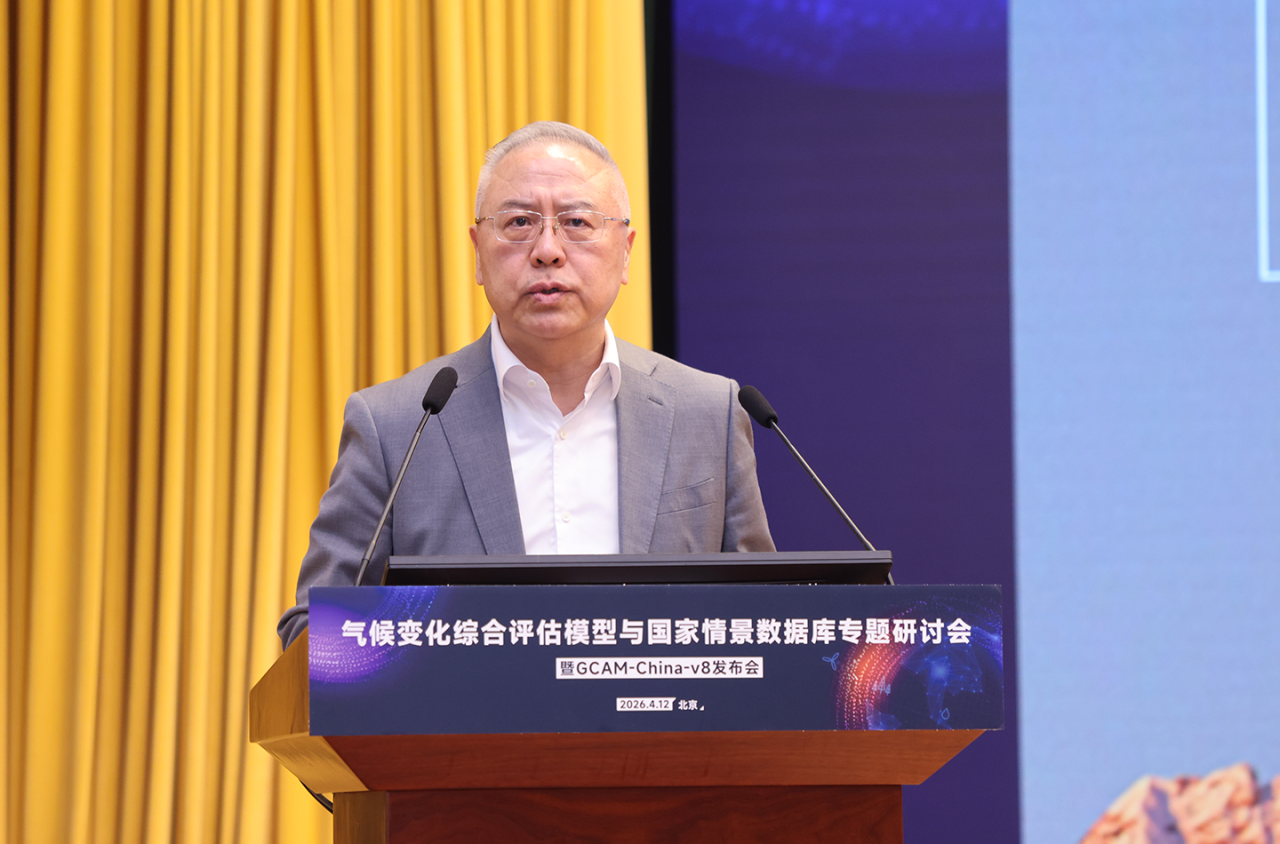
Zhang Xiaoye delivering a keynote speech
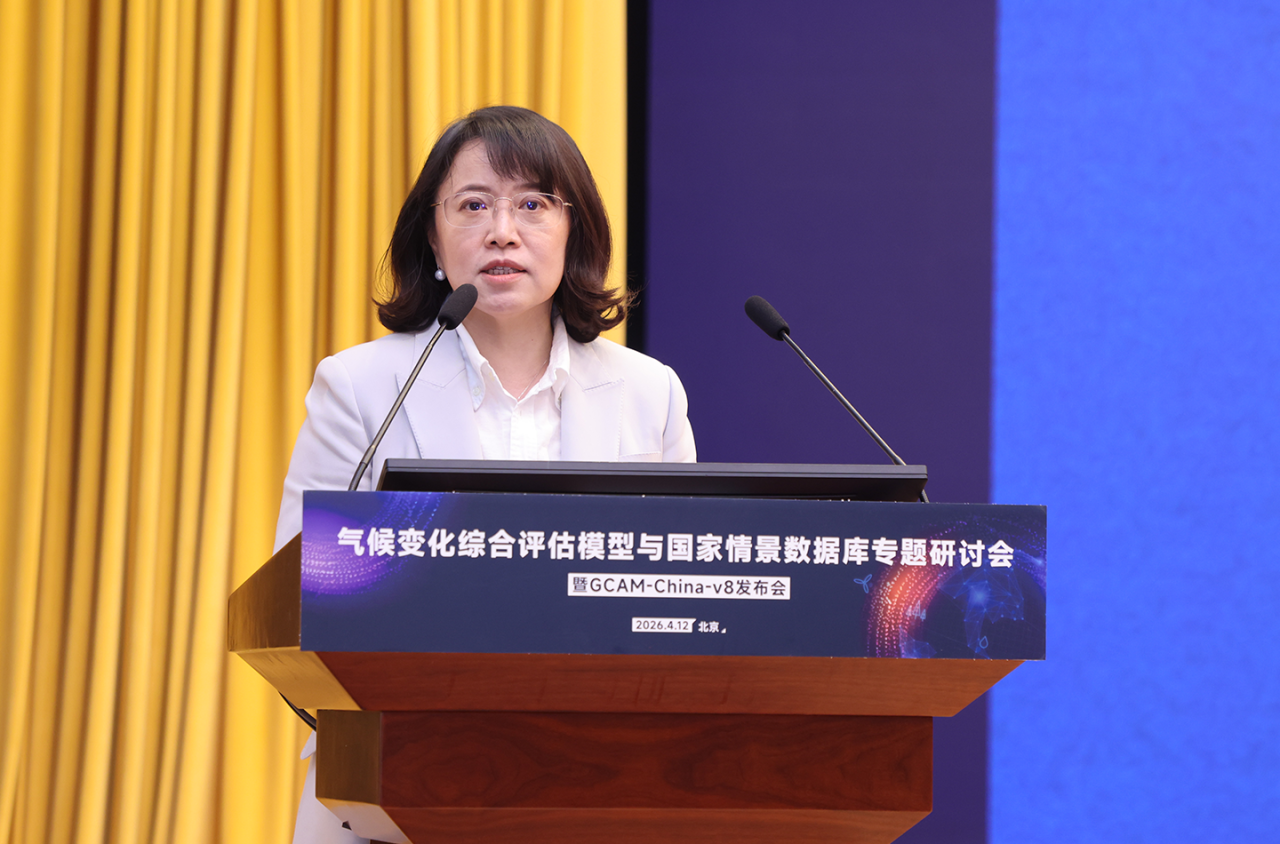
Wu Libo delivering a keynote speech
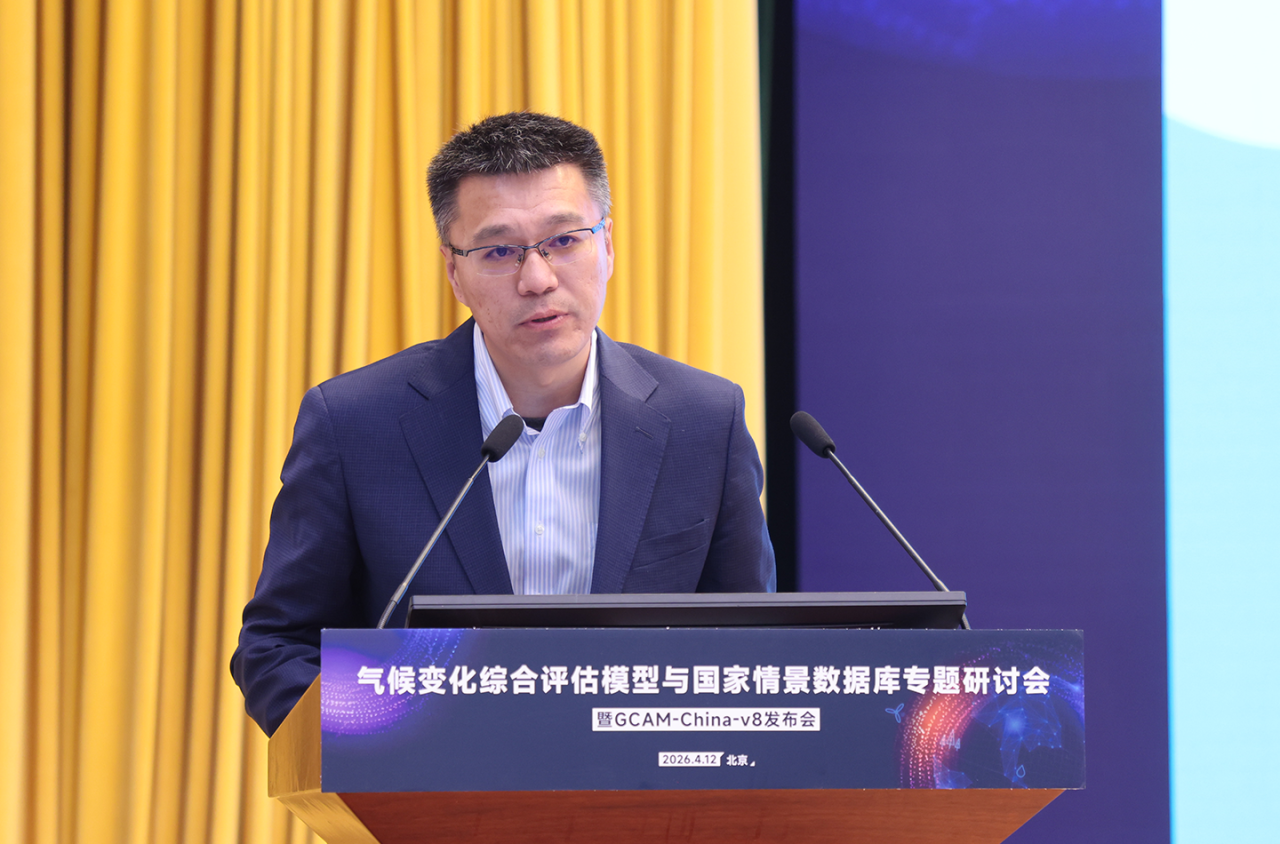
Feng Kuishuang delivering a keynote speech
In the special report session, Professor Chen Wenying from the Institute of Energy, Environment and Economy, Tsinghua University; Professor Duan Hongbo from the School of Economics and Management, University of Chinese Academy of Sciences; Professor Jiang Tong from the School of Geographical Sciences, Nanjing University of Information Science and Technology; Chai Qimin, Research Fellow and Director of the Strategic Planning Department of the National Center for Climate Change Strategy and International Cooperation; and Professor Gu Baojing, Deputy Dean of the College of Environment and Resources, Zhejiang University, delivered special reports. They engaged in in-depth exchanges on topics including multi-spatiotemporal scaling of carbon neutrality transition models, updated NDC targets and carbon neutrality integrated assessment, climate scenario evolution, NDC 3.0 development, and carbon‑nitrogen synergistic governance. The reports covered multi-sector synergistic transition pathways, multi-model comparison studies, the evolution of climate scenario frameworks, 2035 target论证, and pollution reduction and carbon mitigation synergy, further demonstrating the broad application potential of integrated assessment models and scenario research in supporting national strategic analysis and green and low‑carbon transition.
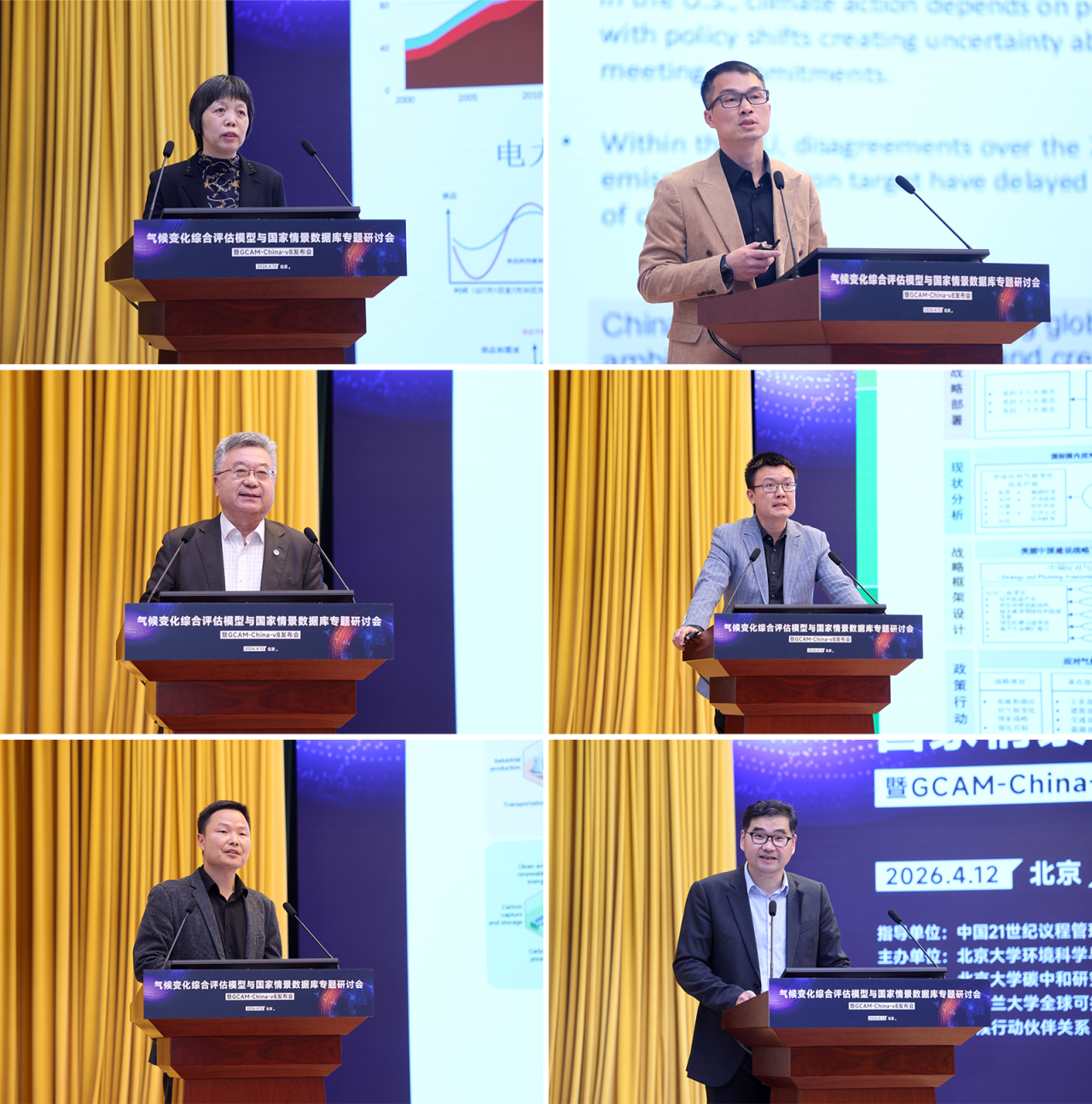
Chen Wenying, Duan Hongbo, Jiang Tong, Chai Qimin, and Gu Baojing delivering special reports, chaired by Lu Xi
Ou Yang, Research Fellow at the College of Environmental Sciences and Engineering, Peking University, introduced the latest developments in model development on behalf of the team. GCAM-China‑v8 has achieved new progress in base-year updates, provincial water supply and demand modeling, refined representation of power systems, enriched scenario design, and improved auxiliary tools, further enhancing the model's capacity to support analysis of China's low‑carbon transition pathways, policy scenario simulation, and national scenario database development. Ou Yang stated that as the model community continues to grow, the construction of the national scenario database is advancing in parallel. The next steps will focus on continuously improving data transparency, sectoral coverage, and quality control to support the preparation of the Fifth National Assessment Report on Climate Change and related strategic research.
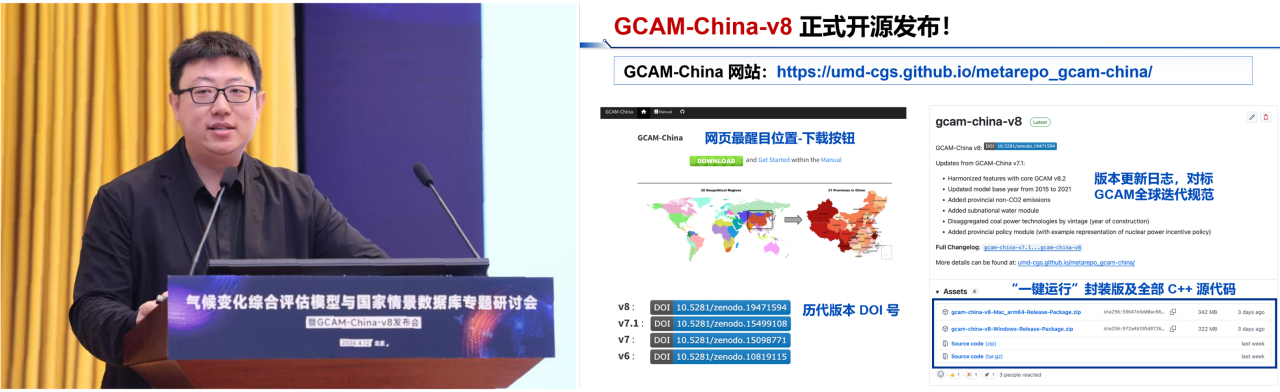
Ou Yang introducing the GCAM-China‑v8 model
In two roundtable forums held that day, multiple experts and scholars from the National Center for Climate Change Strategy and International Cooperation, Tsinghua University, Peking University, the Chinese Academy of Sciences, Renmin University of China, and other universities and research institutions engaged in in-depth discussions on two themes: the construction of the national scenario database and the green and low‑carbon transition during the 15th Five‑Year Plan period. Experts noted that China's climate change integrated assessment is currently at a critical stage of accelerating the shift from "scenario analysis" to "solution support." On one hand, it is necessary to accelerate the construction of an independently controllable, transparent, comparable, and continuously updated national scenario data system, enhancing the ability to link Chinese scenarios with global scenarios, achieve multi-objective synergistic governance, and support scientific assessment for strategic decision-making. On the other hand, further strengthening the capacity of integrated assessment models to support differentiated emission reduction pathways for key industries, the engineering feasibility of key technologies, the alignment of 15th Five‑Year Plan goals with NDC 3.0 targets, and the coordination of multi‑scale methods is essential to advance model scenario research from future trend assessment to the design of practical pathways and implementation of policy measures.
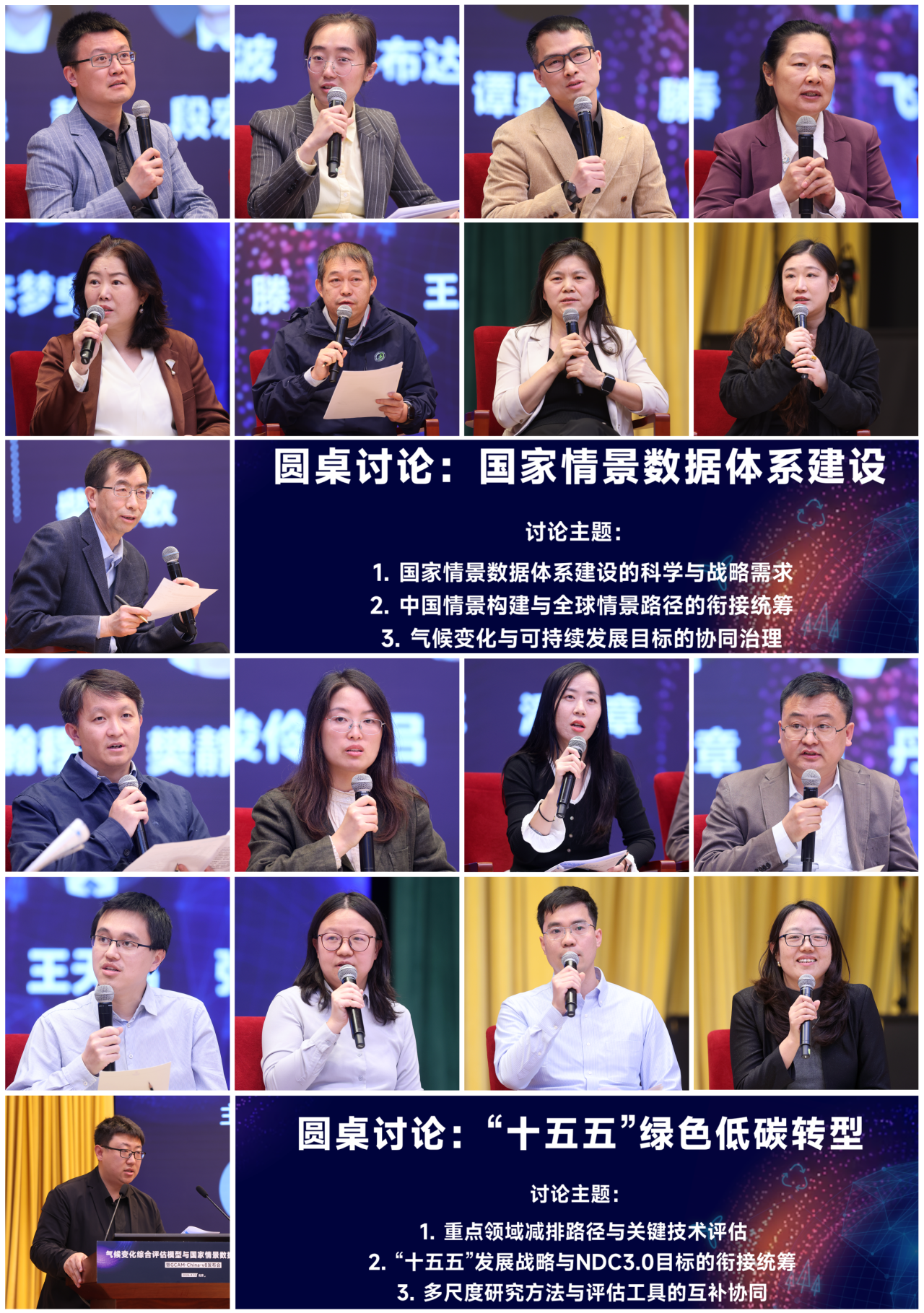
Chai Qimin, Cheng Jing, Duan Hongbo, Su Buda, Tan Xianchun, Teng Fei, Wang Shuxiao, and Zhu Mengye participating in Roundtable Forum 1, chaired by Li Zhenshan; Dai Hancheng, Fan Jingli, Liu Junling, Lyu Zheng, Pan Xunzhang, Tong Dan, Wang Tianpeng, and Zhang Yongxiang participating in Roundtable Forum 2, chaired by Ou Yang
In the concluding session of the seminar, Zhang Xian, Director of the Climate Change Division, Administrative Center for China's Agenda 21, noted that the seminar fully demonstrated the positive progress China has made in climate change integrated assessment models, national scenario development, and multi‑model coupling and collaborative research. It identified key issues and research directions to support the preparation of the Fifth National Assessment Report on Climate Change and the development of the national scenario database. The release of GCAM-China‑v8, the ongoing NDC 3.0 assessment research, and the continuous advancement of cross‑scale and cross‑sectoral model collaboration have laid a solid foundation for the development of China's climate change integrated assessment system. Going forward, efforts should continue to strengthen exchanges and collaboration, improve regular discussion mechanisms, and pool the strengths of all parties to jointly promote the construction of the national scenario database and the continuous deepening of related assessment work.
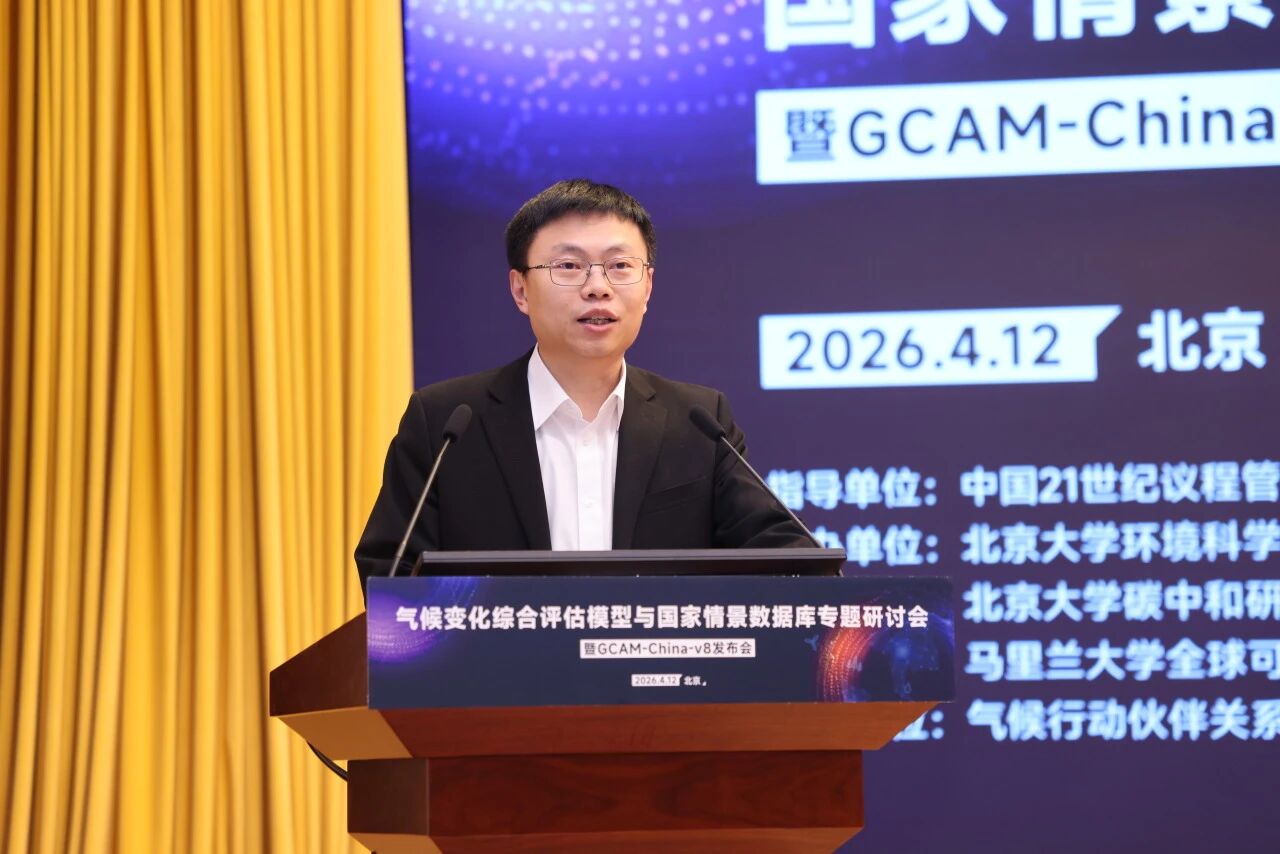
Zhang Xian delivering the concluding remarks
The convening of this seminar has consolidated research efforts in the field of integrated assessment models and national scenario database development in China, deepening exchanges and collaboration among different modeling teams, disciplines, and institutions. In the future, relevant organizations will continue to focus on the needs of the Fifth National Assessment Report on Climate Change, advancing the construction of the national scenario database, the improvement of model methodologies, and multi‑disciplinary collaborative research, contributing more Chinese insights and practical solutions to enhance China's climate change integrated assessment capabilities, support medium‑ and long‑term low‑carbon development strategy research, and deepen participation in global climate governance.


 Latest recommendations