
Despite turbulent geopolitical competition, academic and industrial exchanges and collaboration on decarbonization continue to persist, upheld by visionary individuals. This shared understanding, which transcends national borders and political differences, is building a solid line of defense in the vacuum of global climate governance, demonstrating the courage, rationality, and foresight of the academic and innovation community.
However, with immature technologies, fragmented funding, and divergent policies, what path should international decarbonization research collaboration take? The journal Technology Review for Carbon Neutrality (TRCN) has published a strategic perspective article titled "Can we develop better international research collaboration on decarbonization?" authored by Academician John Loughhead of the UK.
Focus: Design mechanisms and models for international research collaboration
Recommended audiences: International cooperation leads at national/provincial development and reform commissions, ministries of science and technology, energy administrations, and ecology and environment departments; research funding managers at science foundations, funding agencies, universities, and enterprises; managers and applicants of international research collaboration projects; researchers in global innovation ecosystems and global governance.
Citation: Loughhead JN. Can we develop better international research collaboration on decarbonization?. Technology Review for Carbon Neutrality, 2025, 1: 9550002. https://doi.org/10.26599/TRCN.2025.9550002
Author Biography

Professor John N. Loughhead is a Fellow of the Royal Academy of Engineering (UK), a Foreign Fellow of the Chinese Academy of Engineering, and a Professor at the University of Birmingham, UK. He has held numerous high-level positions across government, academia, and industry, including Chief Scientific Adviser at the UK Department for Business, Energy and Industrial Strategy; Chair of the Steering Committee of Mission Innovation (a multi‑national ministerial collaboration mechanism); President of the Institution of Engineering and Technology (IET); Executive Director of the UK Energy Research Centre; and Vice President of Alstom France. Throughout his career, he has been deeply involved in leading international high‑tech R&D, national energy research planning, intergovernmental science and technology collaboration programs, and international clean energy innovation policy formulation, giving him profound insights into global research collaboration mechanisms.
Key Insights at a Glance
Academician Loughhead points out that despite intensifying global geopolitical challenges, international exchanges on decarbonization technologies remain active. However, exchange does not equal collaboration, and true research collaboration still faces many "soft obstacles":
Loose forms of collaboration: Mostly short‑term, small‑scale projects lacking systematic and strategic direction;
Significant institutional differences: Divergent research systems, funding mechanisms, and priorities across countries make it difficult to form a cohesive force;
Challenges in sharing outcomes: Issues of intellectual property and sensitive technologies often limit collaboration to mere "information exchange."
He emphasizes the need to strengthen the pragmatic design of research collaborations and highlight the comparative advantages of each party. He specifically cites the UK‑China (Guangdong) CCUS Centre as a typical case of "complementary collaboration": the UK side contributes theoretical analysis, while the Chinese side advances demonstration project construction, with each party contributing funding and working synergistically. He argues that future international research collaboration should focus on three major directions:
Disruptive technological innovation (e.g., photon‑driven industry, long‑duration energy storage, low‑carbon building materials);
Methods and approaches for rapid large‑scale technology deployment;
Collaborative research on policy tools such as carbon budgets.
Extended Case Study: The UK‑China (Guangdong) CCUS Centre
Let us further unpack the typical case mentioned by Academician Loughhead: What collaboration model does it adopt? What are its core experiences and challenges, and what new insights can we gain?
Background of the collaboration: The UK‑China (Guangdong) CCUS Centre originated from a CCS feasibility study project in Guangdong Province supported by the UK Foreign and Commonwealth Office (FCO) in 2009. With coordinated participation from the Chinese and UK governments, academia, and industry, the Centre was formally established in 2013, and a Memorandum of Understanding for continued cooperation was renewed in 2024, focusing on technical exchanges and collaboration on CCUS.
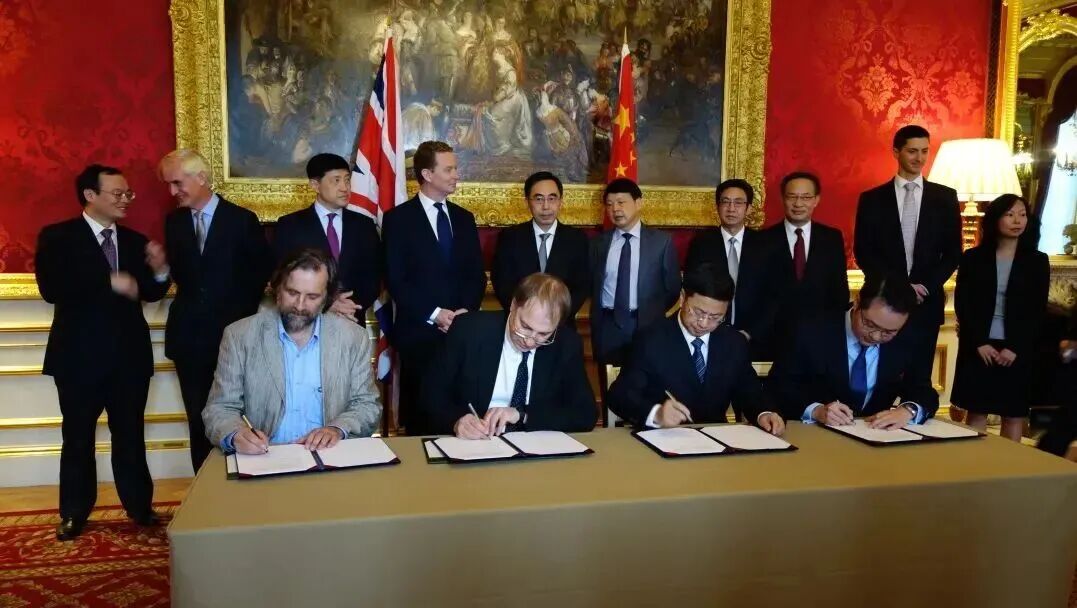
September 2013: Witnessed by Zhu Xiaodan, then Governor of Guangdong Province, and Gregory Barker, then UK Minister of State for Energy and Climate Change, Guangdong Electric Power Design Institute, Clean Fossil Energy Company, the UK CCS Research Centre, and the Scottish CCS Centre signed a Memorandum of Understanding on UK‑China decarbonisation cooperation in London. (Image source: UK‑China (Guangdong) CCUS Centre website)
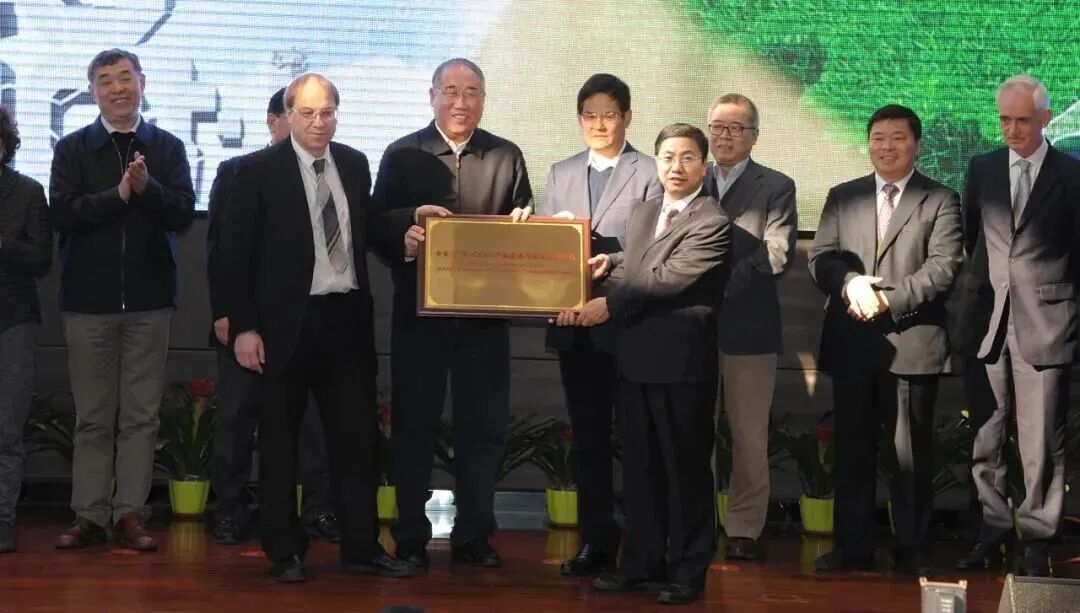
December 2013: Witnessed by Xie Zhenhua, then Vice Chairman of the National Development and Reform Commission, and Xu Shaohua, then Executive Vice Governor of Guangdong Province, the UK‑China (Guangdong) CCUS Centre was officially inaugurated and established at Guangdong Electric Power Design Institute. (Image source: UK‑China (Guangdong) CCUS Centre website)
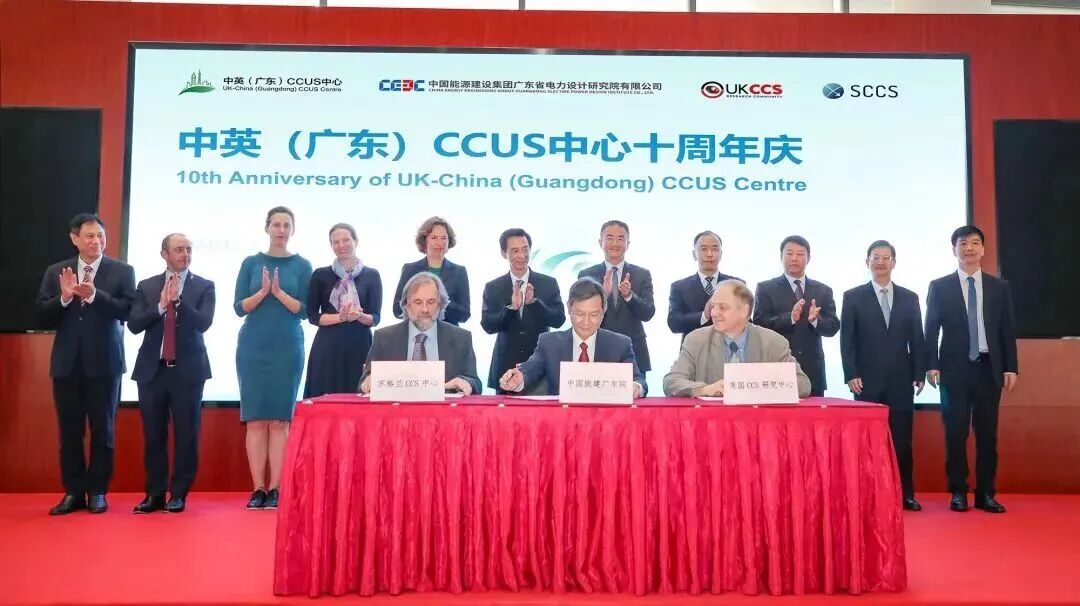
January 2024: Witnessed by Zhang Shaokang, Vice Governor of Guangdong Province, and Caroline Wilson, UK Ambassador to China, Guangdong Electric Power Design Institute, the UK CCS Research Centre, and the Scottish CCS Centre renewed the Memorandum of Understanding on UK‑China CCUS Industry and Academic Exchange. (Image source: UK‑China (Guangdong) CCUS Centre website)
Collaboration Model: Government platform building, institutional support, industry execution, multi‑stakeholder empowerment
Government provides strategic framework support: National Development and Reform Commission, Guangdong Provincial Government, UK Department of Energy and Climate Change, Guangdong Provincial Development and Reform Commission, UK Consulate‑General Guangzhou
Research institutions provide technical support: University of Edinburgh, UK CCS Research Centre, Scottish CCS Centre; China Energy Engineering Group Guangdong Electric Power Design Institute, Guangdong Low‑Carbon Technology and Industry Research Centre, Clean Fossil Energy Development Centre
Enterprises deliver engineering demonstration deployment: China Resources Power built a testing platform, providing testing services for technologies from Shell, CNPC, CNOOC, and others
Each party contributes funding: The UK Foreign and Commonwealth Office's Global Prosperity Fund (SPF) provided funding for research at the University of Edinburgh; Scottish investment agencies, the Global CCS Institute, Howden Group, Alstom, and others provided sponsorship; China Resources Power financed the construction of the testing platform; the Asian Development Bank and others provided research funding support
Collaboration outcomes: From research reports to physical facilities, from technology testing to cluster planning
May 2019: China Resources Power led the investment and construction of the Haifeng Carbon Capture Testing Platform at a total cost of approximately 100 million RMB, with a capture capacity of 20,000 tonnes per year. It has become one of the world's three largest carbon capture technology pilot test centers, alongside the U.S. National Carbon Capture Technology Test Center and the Norwegian Technology Centre Mongstad. To date, it has completed formula solvent testing and membrane technology testing for more than ten clients, including Shell, China Energy Investment Group (CHN Energy), and CNPC.
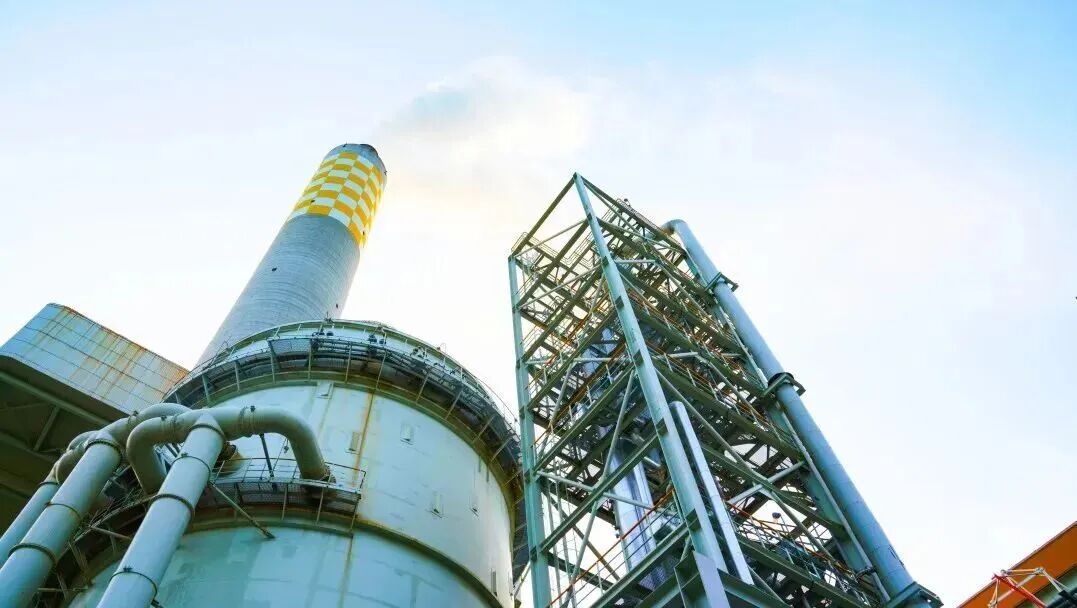
Designed and built Asia's first and the world's third carbon capture technology pilot test platform (Image source: UK‑China (Guangdong) CCUS Centre website)
Guangdong Province Carbon Dioxide Capture, Utilisation, Transport and Storage Planning Study Report: Produced by the Centre, the report proposes the development of four major CCUS industrial clusters (Guangzhou‑Foshan‑Zhaoqing & Shenzhen‑Dongguan‑Huizhou cluster, Pearl River Estuary West Bank cluster, Eastern Guangdong cluster, Western Guangdong cluster). Clustering can reduce carbon capture costs by an average of approximately 26%; at a scale of 3 million tonnes per year, costs could fall from 600 RMB/tonne to 208 RMB/tonne. Collaborative research with the University of Edinburgh and the Scottish CCS Centre on unconventional basalt mineralization storage technology (which has been successfully tested in the United States and Iceland).
Collaboration experiences
Experience 1: Adhere to an "industry‑driven" approach, avoid "collaboration for collaboration's sake"
The Centre has consistently aligned its work with the practical needs of Guangdong Province, with every step closely tied to the emission reduction pain points of Guangdong as a major industrial and coastal province. This "problem‑driven, implementation‑first" approach has enabled the Centre to deliver substantial outcomes over the past decade, rather than remaining at the level of "meeting and exchanging."
Experience 2: Build "multi‑layered partnerships" to enhance resilience
When intergovernmental climate cooperation between China and the UK experienced turbulence, the Centre did not stagnate. The reason is that its collaborative relationships had already been embedded at the institutional and industrial levels:
January 2024: Guangdong Electric Power Design Institute, the UK CCS Research Centre, and the Scottish CCS Centre renewed the "UK‑China Industry and Academic Exchange Memorandum of Understanding"
December 2024: The Centre signed a cooperation agreement with the Global CCS Institute
Professor Stuart Haszeldine, Director of the Scottish CCS Centre, explicitly stated at the 10th‑anniversary event that collaboration would continue in areas such as postgraduate training and basalt storage
This demonstrates that multi‑layered partnerships are more resilient than single‑government agreements.
Lessons learned
Lesson 1: Policy support remains insufficient
Many experts pointed out at the 10th‑anniversary symposium that current CCUS support policies are primarily based on national‑level top‑down design, with relatively few supporting policies at the local level, hindering industrialization. Representatives from the Oil and Gas Climate Initiative (OGCI) suggested adding carbon capture electricity price incentives on top of capacity tariffs. This indicates that even with successful international collaboration, without effective integration into the domestic policy system, technology commercialization still faces a "last‑mile" barrier.
Lesson 2: Capture cost remains a "tough nut to crack"
Although clustering can significantly reduce costs, the capture phase still faces challenges of high cost, high energy consumption, and large system footprint. Experts at the symposium emphasized that reducing capture cost is key to lowering the cost of the entire CCUS chain, requiring continued breakthroughs in solvent development, process optimization, system integration, and other areas. International collaboration can play a greater role in these "hard technology" areas. In the future, if further progress is made in policy incentives and cutting‑edge technological breakthroughs, this testing ground may truly grow into a model case for international decarbonization cooperation.
References:
[1] UK‑China (Guangdong) CCUS Centre website. http://www.gdccus.org/col.jsp?id=110.
[2] Scottish CCS Centre (2024). Renewed Memorandum of Understanding to mark 10th anniversary of the UK‑China (Guangdong) CCUS Centre. https://www.sccs.org.uk/latest/news/renewed-memorandum-understanding-mark-10th-anniversary-uk-china-guangdong-ccus-centre.
[3] Lin Dianchi (2024). Seeking a path for industrial decarbonization in the Greater Bay Area: clear advantages of CCUS industrial cluster scale. 21st Century Business Herald. https://www.21jingji.com/article/20240116/herald/0e0b50c2bb76f5ae3b638f47e5c1dae8.html.
Conclusion
Academician Loughhead's article opens a window for us, revealing the current state and potential of international decarbonization research collaboration. It teaches us that successful collaboration is not about how many agreements are signed or how many meetings are held, but about whether, across heterogeneous research systems, we can find the interface where each party can leverage its strengths while jointly tackling challenges. If we can truly join forces in technology R&D, industrial demonstration and application, and policy support, the global pursuit of breakthroughs in key technologies will no longer be a distant goal.
Citation: Loughhead JN. Can we develop better international research collaboration on decarbonization?. Technology Review for Carbon Neutrality, 2025, 1: 9550002. https://doi.org/10.26599/TRCN.2025.9550002


 Latest recommendations