1. Basic Information
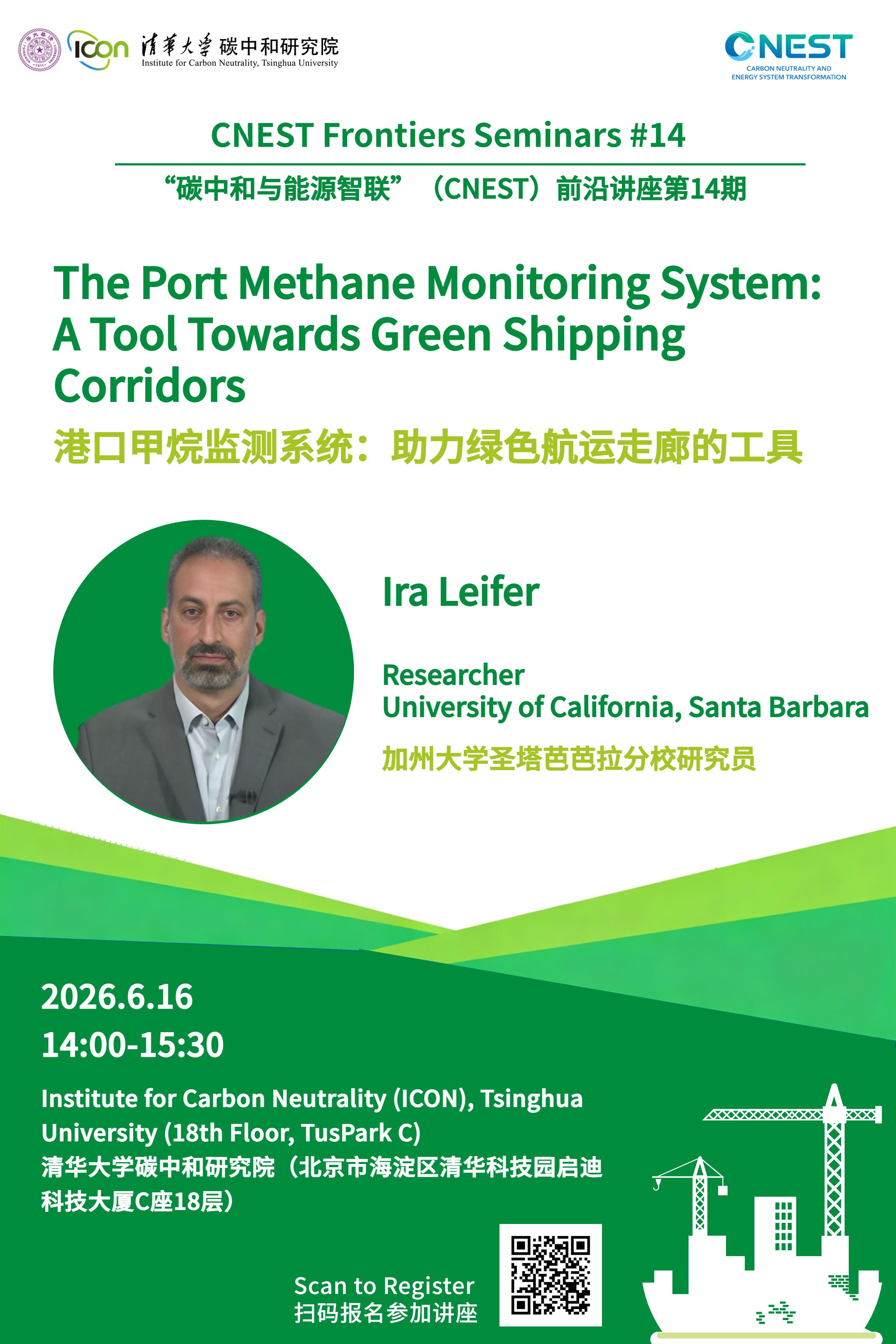
Date: June 16, 2026 (Tuesday) 14:00–15:30
Venue: Main Conference Room, Institute for Carbon Neutrality, Tsinghua University (18th Floor, Tower C, Science and Technology Building, TUS Park, Haidian District, Beijing)
Speaker: Ira Leifer
Lecture Title: The Port Methane Monitoring System: A Tool Towards Green Shipping Corridors
2. Main Agenda
(1)Welcome and Introduction
(2)Keynote Lecture
(3)Discussion and Exchange
3. Lecture Abstract
Globally, ports and the surrounding, related industry are major sources of greenhouse gases (GHG) and air pollution. We discuss a prototype Port Methane Monitoring System (Port-MMS) to support policy development, monitoring, and efficacy assessment of mitigation strategies focused on the Ports of Long Beach and Los Angeles, the largest in the western hemisphere, and surrounding heavy industries. 10 mobile air quality lab surveys 2019-2025 were conducted by SISTER (Standard Instrumentation Suite: Truck Enabled for Response), that continuously measured meteorology, aerosols, 15 trace gases, including methane (CH4), and targeted air samples for laboratory analysis of up to 87 trace gases. Port area CH4 emissions for were 7.3±0.7 Gg CH4 yr-1, primarily from oil production (71%) and refineries (25%). Measured (top-down) refinery CH4 emissions were triple CARB (bottom-up) values. Supersampled TROPOMI satellite data allowed facility scale (sub-km) emissions derivation with better agreement with in situ than with CARB. Discrepancies between satellite anomaly relative strengths and CARB inventories were proposed due to transient releases, characterized in the upper decile in satellite CH4 maps, which likely are not represented in the inventories. The Port MMS was presented to a stakeholder workshop with surveys showing areas of greatest interest.
4. Speaker Biography
Ira Leifer
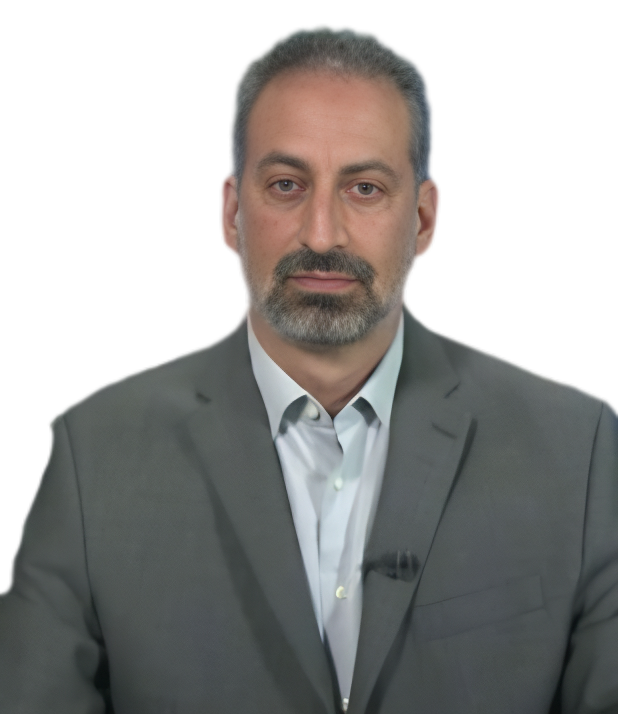
Dr. Ira Leifer is a researcher at the Department of Chemical Engineering and the Marine Sciences Institute at University of California, Santa Barbara. He has worked for several decades on natural and unnatural hydrocarbons in the ocean and atmosphere by in situ and remote sensing, including oil, greenhouse gases, and other trace gases. Dr. Leifer has developed unique, state-of-the-art science platforms, such as SISTERTM – a mobile air quality laboratory for installation in a pickup truck and SeaSpiresTM – an oil slick thickness remote sensing package for airborne deployment. These and other custom developed science systems have been featured in numerous peer reviewed publications and major media.
Dr. Leifer is also the CEO and Chief Scientist of Bubbleology Research International (BRI), a small, flexible, greentech company focused on environmental consulting, instrumentation development, satellite data analysis and validation, and environmental assessment since 2003. BRI has handled complex projects for Fortune 500 companies, involving universities, the Navy, NASA, NSF, and other state and federal agencies.
Dr. Leifer received his Bachelor’s degree in physics/astronomy from SUNY at Stony Brook, New York, Master’s degree in aeronomy from University of Michigan, and Ph.D. in atmospheric sciences from Georgia Institute of Technology.
His active research areas and interests:
· Leak detection from oil and gas production, refining, and distribution
· Oil spill remote sensing
· Natural marine hydrocarbon seepage, relationship to reservoir dynamics, and production and upper food web ecosystem impacts.
· Health impacts of air pollution on downwind communities.
· Sustainable dairies and shrinking the environmental footprint in situ and remote sensing measurement of dairy methane, ammonia, aerosols, and other gas emissions to identify sustainable best practices.
· Rift valley volcanic trace gas emissions
· Arctic methane
5. Registration
A limited number of in-person attendance slots are available for this seminar. If you are interested in participating, please scan the QR code below to register before 20:00 on June 15, 2026. The organizing committee will send a confirmation email to successful registrants.



 Latest recommendations