From December 3 to 6, the 4th Carbon Neutrality Forum for Doctoral Students was successfully held in Baoshan District, Shanghai. Organized permanently by Tsinghua University and the Association of Chinese Graduate Education(ACGE), with East China University of Science and Technology(ECUST) serving as the annual host, the event brought together leading minds to foster interdisciplinary collaboration and innovation in carbon neutrality.
Aimed at building a high-level, interdisciplinary platform for young scholars to exchange ideas on “Dual Carbon” goals (carbon peaking and carbon neutrality), the forum featured an opening and closing ceremony, a special session on industry-academia innovation, six parallel academic sub-forums, a poster exhibition, and a closed-door seminar on future education in carbon neutrality. The event attracted over 260 experts, scholars, and young students from more than 80 universities, research institutes, and enterprises across China, including Tsinghua University, Peking University, and Fudan University.
The forum was organized by ECUST's School of Carbon Neutrality Future Technology. Co-organizers included the Institute for Carbon Neutrality at Tsinghua University, the Engineering Work Committee and Engineering Professional Degree Work Committee of ACGE, the Tsinghua Student Association for Carbon Neutrality Research, the ECUST Graduate Student Union, and the journal Technology Review for Carbon Neutrality.

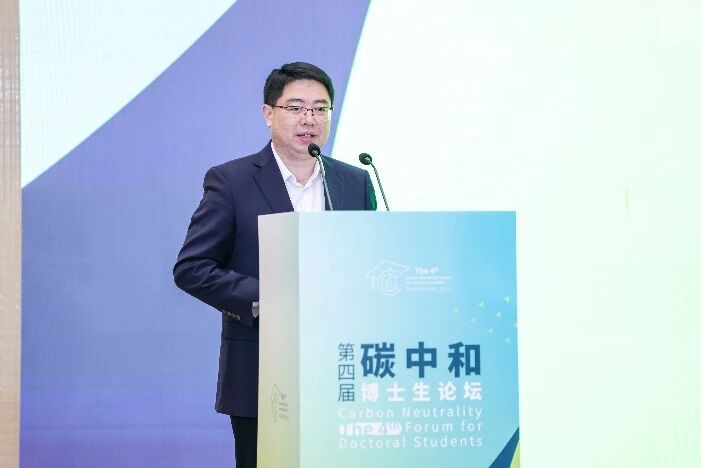
During the opening ceremony on the morning of December 4, Mr. Xiao Gang, Deputy District Mayor of Baoshan District, highlighted the region's transformation from an industrial hub to a model zone for green development. With the scale of its green and low-carbon industries exceeding 100 billion RMB, he expressed hope that the forum would serve as a nexus to gather intellectual resources and drive continuous innovation in carbon neutrality practices.
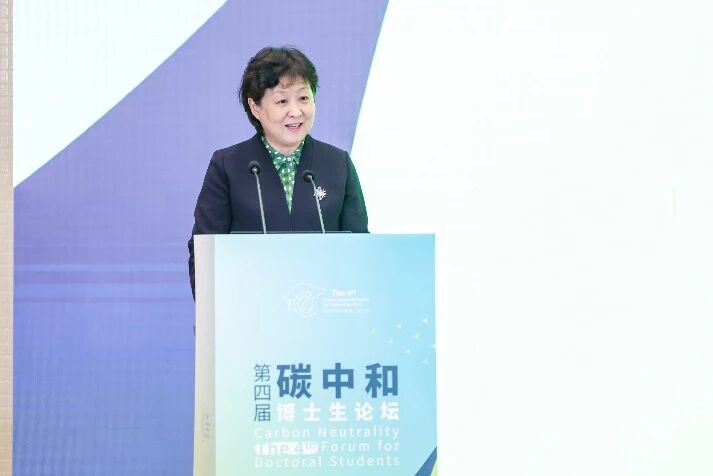
Professor Wang Huifeng, Vice President of ECUST, outlined the university's strategic layout in talent cultivation and industry-academia-research integration within the carbon neutrality sector. She emphasized that through “university-local collaboration” and the unity of knowledge and action, the institution aims to elevate interdisciplinary cooperation, technological innovation, and industry-academia fusion to new heights.
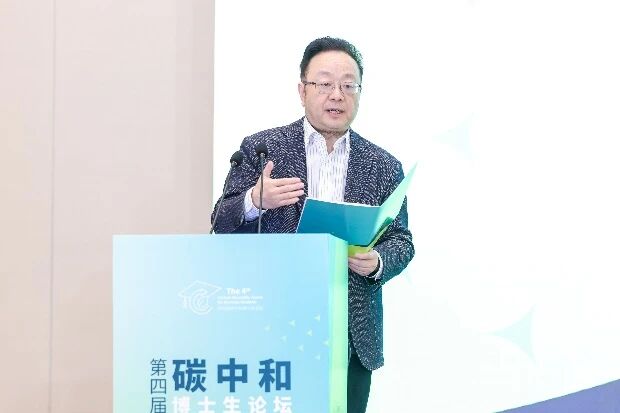
Academician He Kebin, Dean of the Institute for Carbon Neutrality at Tsinghua University and Permanent Chair of the Forum, reflected on the event's growth over the past three years, which has seen participation from over 200 universities and institutions globally. Drawing on insights from the ongoing 30th UN Climate Change Conference (COP30), he encouraged young scholars to deepen their expertise, foster synergy, and expand cooperation, urging them to integrate their personal development into the global green transition.
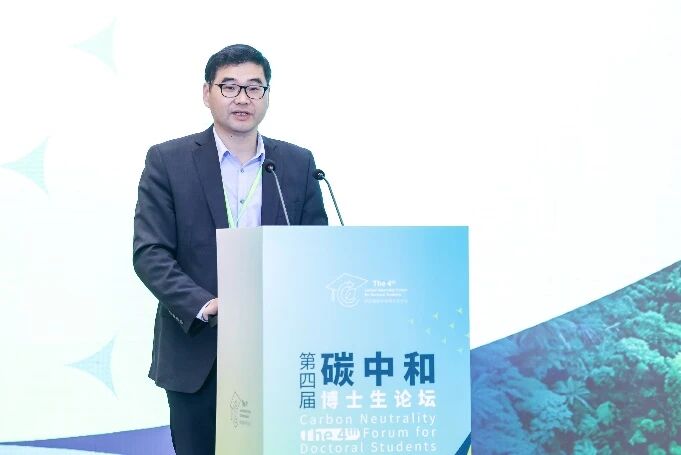
The opening ceremony was moderated by Professor Lu Xi, Assistant Dean of the Institute for Carbon Neutrality at Tsinghua University and Permanent Secretary-General of the Forum. The subsequent keynote session was chaired by Academician Wang Hualin, Dean of the School of Resources and Environmental Engineering at ECUST.
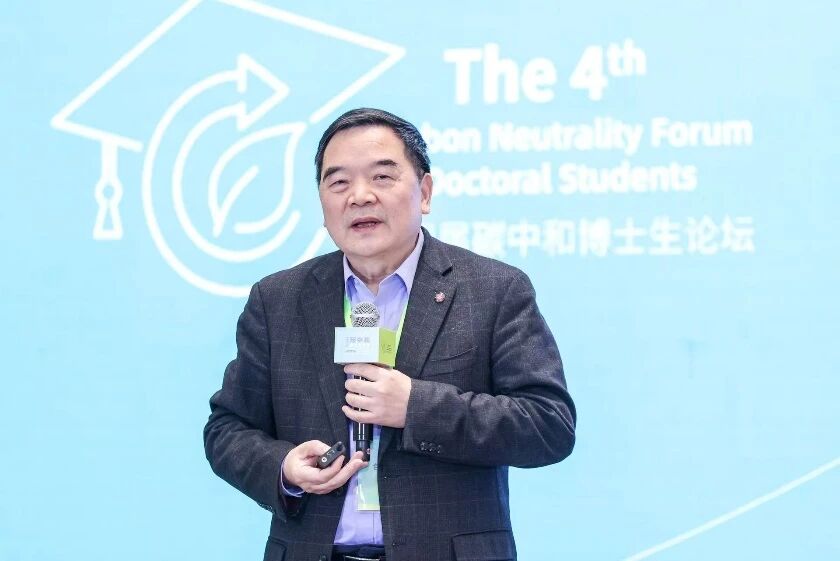
Academician Bao Xinhe, Dean of the Institute of Future Energy at Fudan University, delivered a keynote titled “Integrated Development of Fossil Resources and Renewable Energy under the Dual Carbon Goals.” Addressing China's energy security and industrial transformation needs, he shared breakthroughs in his team's research on “nano-confined catalysis” and envisioned a near-zero emission energy chemical system based on the complementary fusion of fossil and renewable energies.
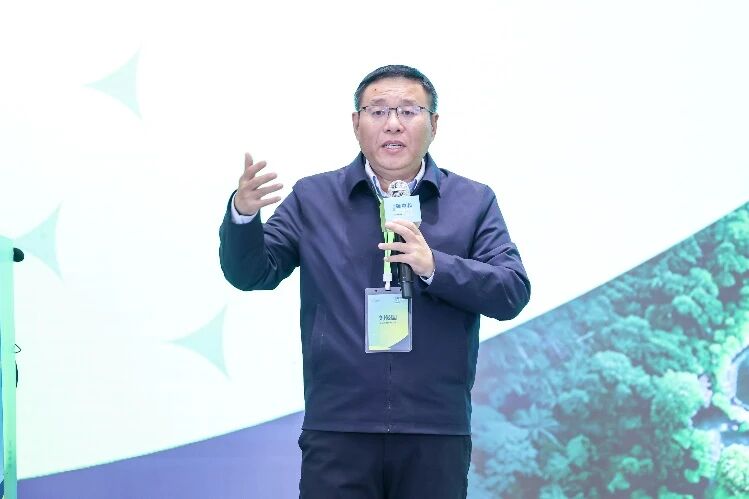
Academician Liu Junguo, President of North China University of Water Resources and Electric Power, presented on “Synergies and Trade-offs between Carbon Neutrality and Water Peaking.” He elucidated the challenges and opportunities in water resource management, emphasizing the critical importance of ecological water security. Citing China's case of peaking water usage, he highlighted the pivotal roles of water-saving policies and industrial structure adjustments.
Both academicians engaged in a lively Q&A session with attending students, offering guidance and clarifying doubts for the next generation of researchers.
From December 4 to 5, the forum hosted a wide array of activities, including the Industry-Academia Innovation Special Forum, the Closed-Door Seminar on Future Carbon Neutrality Education, and a vibrant poster exhibition. Six parallel academic sub-forums covered critical future domains: Future Energy and Power; Future Resources and Materials; Future Manufacturing and Transportation; Future Space and Cities; Future Health and Environment; Future Information and Economics.
These sessions featured 60 oral presentations and showcased over 80 selected posters from young scholars nationwide, facilitating deep dives into cutting-edge research topics.
The success of this year's forum was supported by a broad coalition of institutions, including the Institute of Future Energy at Fudan University, Fudan University's Department of Environmental Science, the Institute for Carbon Neutrality at Tongji University, schools from the University of Shanghai for Science and Technology and Shanghai University, the Shanghai University Carbon Neutrality Innovation Research Center, China Construction Bank (Baosteel Baoshan Sub-branch), the Friendship Economic Development Zone of Baoshan District, and several technology and energy service companies such as Shanghai Huanfu Future Technology Development Co., Ltd. and Shanghai TanSuo Energy Service Co., Ltd., alongside various colleges and the Graduate School of ECUST.


 Latest recommendations